Measure how loud it is, and where the noise comes from — accredited.
How loud is it, how much does it shake the structure it sits on, and where is the noise coming from? Accredited noise and vibration measurement, with engineers who help you fix what they find.
What customers bring us
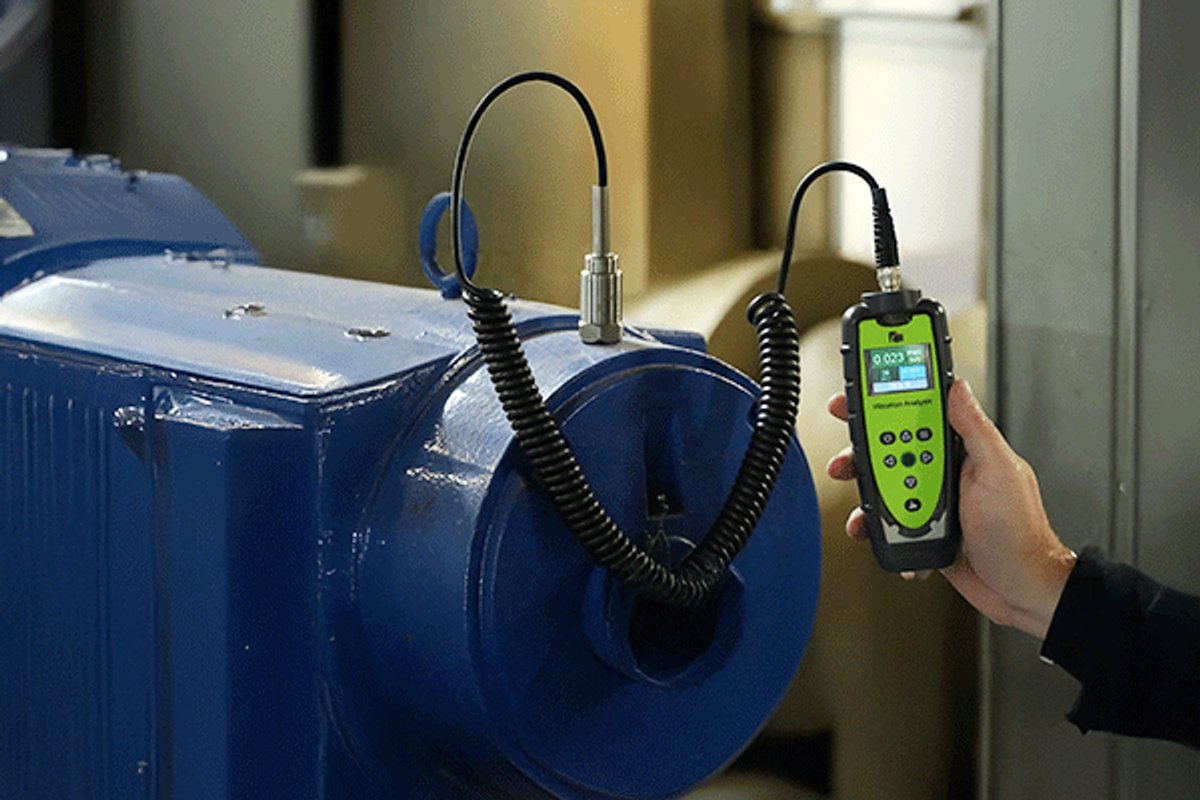
ABN/SBN acceptance of a pump-motor set for a naval platform
Sound-power determination of a generator to ISO 3744
Structure-borne noise path ranking before mount redesign
What we run it on
- Multi-channel analysers, accelerometers and microphones
- In-house DSP toolkit for FFT / PSD / octave / FRF reduction
Engineering alongside
Pre-test analysis, fixture design and correlation are available for every job in this lab — so a marginal design is caught in the model, not on the machine.
Engineering →Which test answers your question?
Not sure which measurement you need? Start with the question you're trying to answer. Cards show which measurements are NABL accredited. Engineers: methods, standards and reported properties are in the standards & methods reference.
Noise
How loud is it — and does it meet the limit?
We measure the noise all around your equipment while it runs, and turn it into a single figure for how much noise it makes — the number noise limits are written in.
You get- How much noise it makes
- Pass or fail against your limit
Does your specification call up a different noise method?
Some customers and classification rules use other noise methods. We measure to the one your specification names.
You get- Results against your specification
Vibration
How much vibration does it pass into the ship?
A running machine shakes whatever it's bolted to, and that vibration travels through a ship's hull and into the water. We measure how much yours passes on.
You get- Pass or fail against your limit
- Where and at what frequencies it was highest
Is the machine running smoothly?
Too much vibration means imbalance, misalignment or wear. We measure it and compare it with the limits for your class of machine.
You get- How your machine compares with the limit
What's causing the noise or vibration?
We record many points at once while the machine runs, then trace the problem back to its source — which part, which speed, which path.
You get- The likely source and path
- What to change
How does the structure respond — and are the mounts doing their job?
Every structure has frequencies where it rings. We find them, and measure whether the mounts isolate the machine the way they should.
You get- The frequencies where it rings
- How well the mounts isolate
Technical detail for engineers — methods, standards, reported properties →
Every microphone and accelerometer, recorded together
Noise and vibration problems are rarely in one place. We record microphones, accelerometers and speed signals — up to 80 channels at once — so a noise can be traced back to its source: which machine, which mount, which running speed.
Plan a noise & vibration survey- Run-up and coast-down with a tacho signal, for order tracking
- Airborne and structure-borne noise measured in the same run
- Up to 80 channels, all on one clock, lined up with the test machine's own signals
- Sampling at up to 1 million samples a second, per channel — fast events aren't missed
- Dewesoft and HBK LAN-XI acquisition modules
Dewesoft, HBK and LAN-XI are trademarks of their respective owners, named only to identify the equipment we use; no endorsement or affiliation is implied.
From specimen to signed report
Measurement plan
We agree the operating conditions, the measurement points and the limits — or the question you need answered.
Set-up
In our lab or on site. Microphones and accelerometers go where the standard or the problem needs them, and we measure the background first.
Measurement
The equipment runs at each specified condition while every channel is recorded together. Progress photos appear in your customer portal.
Analysis & report
Levels against the limits — under the NABL symbol for accredited methods — and, for investigations, the source and what to change.
What to send for a quotation
- The equipment: size, how it's mounted, and what drives it
- The operating conditions — speeds, loads, modes
- The standard and limits, or the problem you're trying to solve
- Whether the equipment can come to us, or needs measuring where it's installed
- How many units or conditions
Who we test for
Noise, vibration & analysis work feeds qualification programmes across these sectors — each page shows the standards and problems we see most.
For engineers: the full method table, standards and equipment ranges for this lab are under For engineers → Methods & standards and Equipment & ranges.
Questions we get about noise, vibration & analysis work
Can we witness the test?
Yes. Tell us at enquiry and we'll book a witness slot. Third-party inspectors are welcome too — RITES, Lloyd's Register, CQAE, IRS, ABS, RINA and other agencies witness tests here.
Can you tell us where the noise comes from, not just how loud it is?
Yes — that's often the real question. We record many points together, rank the sources and paths, and tell you what to change; our analysis engineers can model the fix before you build it.
Can you measure on site?
Yes — at your plant, shipyard or installation, when the equipment can't come to us. On-site measurements are reported without the NABL symbol; accredited airborne and structure-borne noise measurements are made in our lab.
Which measurements are accredited?
Airborne noise to ISO 3744 and MIL-STD-1474E, and structure-borne noise to MIL-STD-740-2, are in our NABL scope. FRF, modal, impedance and mount work are engineering services, reported without the NABL symbol.
How long does it take?
We reply to enquiries within one working day. The test takes as long as the standard sets, and the report follows within 2–3 working days of the test. When we can start depends on engineer availability, which we confirm with the quotation.
Why are some tests accredited and some not?
Our accredited methods are the ones customers ask for most, so we keep them under regular NABL assessment and report them under the NABL symbol. Non-accredited work is usually a custom, rare or specialised method — or one we develop for your problem — reported without the NABL symbol.
Ready to quote noise, vibration & analysis work?
Send the standard, the profile and the unit size — we'll confirm the machine and the schedule.