
Find the problem before the test.
Find the cause when it fails.
Our engineers check your design in a computer model under the loads it will be tested to, and investigate failures when they happen — so you spend less on redesigns and re-tests. Engineers who work next to the test labs, so every prediction can be checked on a real machine.
Bring us the drawing, the prototype, the failure — or the question
Design check
Will it survive the test? Where is it weak? We check in a computer model first, while a change is still cheap.
Prediction → When it failsFailure investigation
Find out why it failed — in test or in the field — and which fix is worth making.
Investigation → Before the formal testDevelopment trials
Bring the prototype early. Find the weak points before the formal qualification.
Development trials → When the standard can't tell youAdvanced measurement
How a structure vibrates, how well mounts isolate, where noise travels — measured, not assumed.
Measurement →Run the test on the model first
We put your design through the loads its test will apply — vibration, shock, heat, pressure, flow — in a computer model, before any hardware is built or booked on a machine.
- Where the design is weak, and by how much
- What to change, ranked by what it costs and what it buys
- Where to put sensors when the real test runs
Why did it fail — and what will actually fix it?
A failed test or a field return is evidence. We work out the loads the part really saw, match a model to measurements of the real hardware, find the cause, and compare the fixes by how much margin each one buys — not by guesswork.
- What loads it really saw
- Why it failed
- Fixes ranked by the margin they buy and what they cost
- A plan for the re-test — which you can run here or anywhere, reported impartially
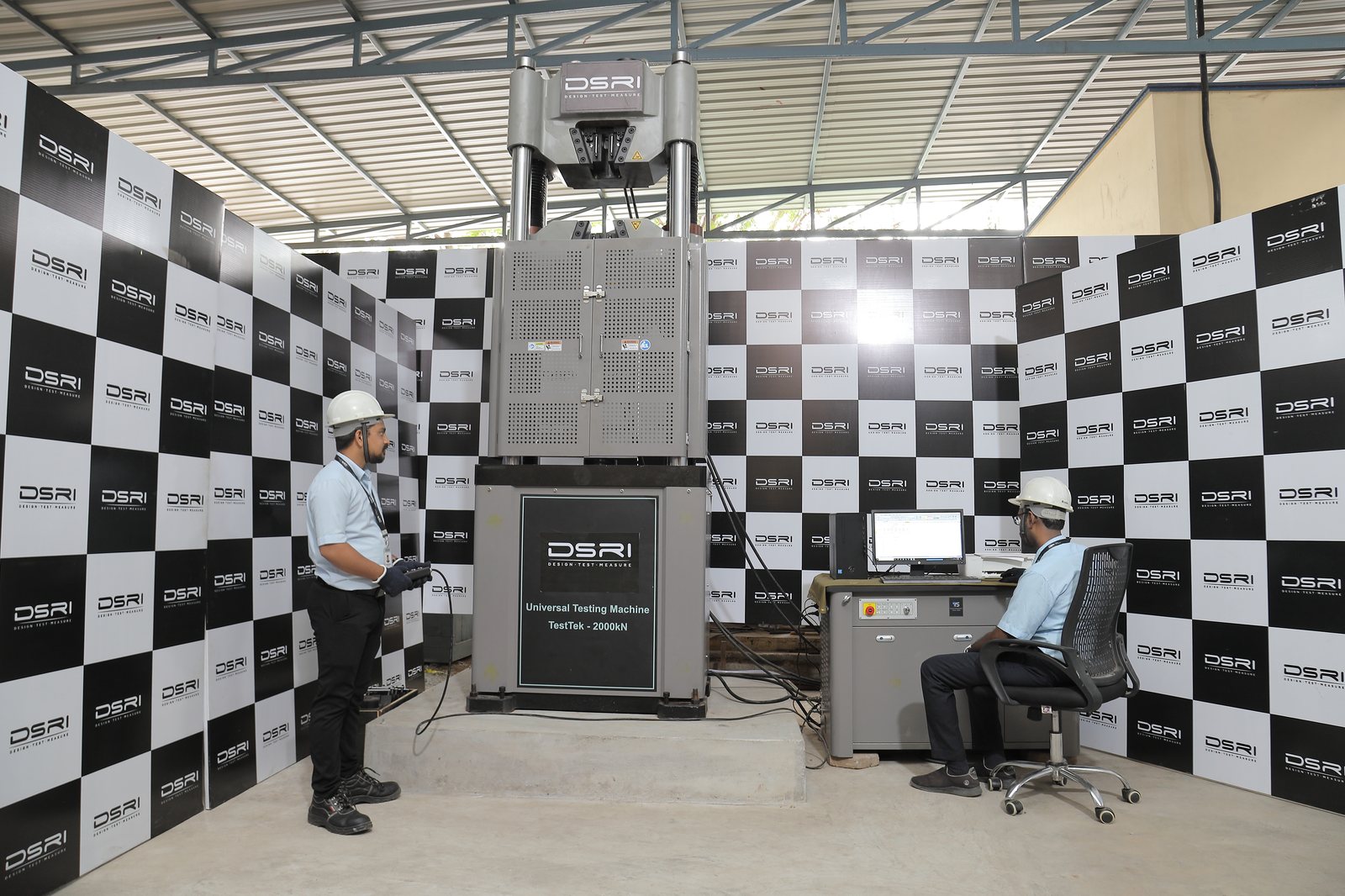
Numbers the standard doesn't give you
Mount & isolator testing
How well a mount stops vibration getting through, measured under real load.
Modal testing
The frequencies where a structure rings, and how it moves — checked against your model.
Impedance & mobility
How easily a structure moves when pushed, and how vibration travels through it.
Fixture & foundation design
Fixtures that don't add resonances; foundations that keep the mount honest.
Checked like a test — and kept separate from one
Analysis follows the same discipline as accredited testing: agreed inputs and acceptance criteria, a requirement-traceability matrix, hold points, and an independent reviewer who is not the engineer who built the model. Restricted-programme data never leaves the lab network.
Impartiality comes first. Test results are reported exactly as measured, whoever the customer. Engineering advice — design analysis, failure investigation, fixture design — is a separate service outside our NABL accreditation, and it never changes how a test is run or reported. Analysis reports carry no NABL symbol; tests run to check a model are reported separately, under the symbol where the method is in scope.
Deliverables
- A report of margins against your acceptance criteria
- Design recommendations, ranked
- Predicted vs measured, side by side
- The model, handed over on request