
Prove the material, the fastener and the joint — static, cyclic and fatigue.
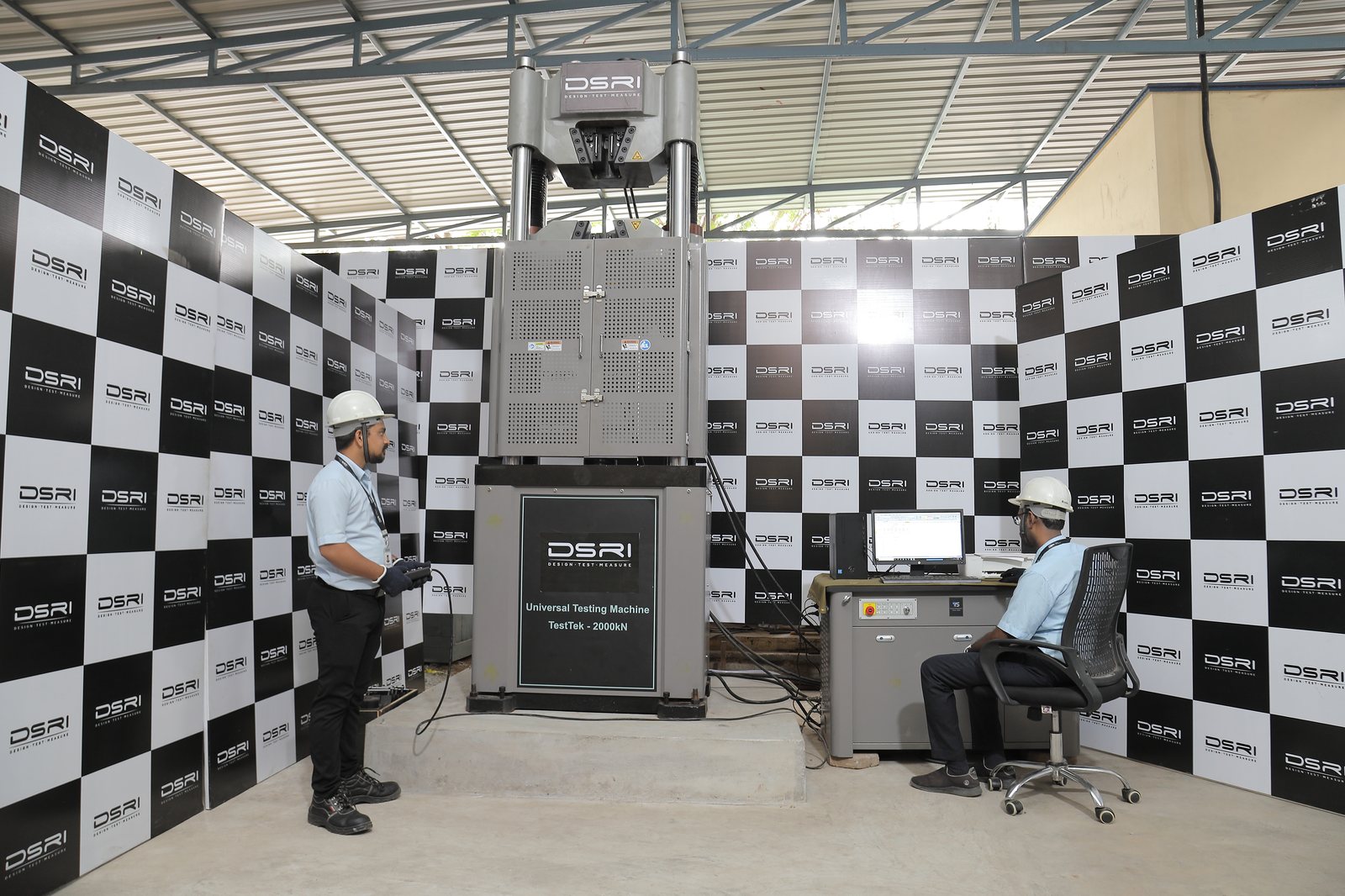
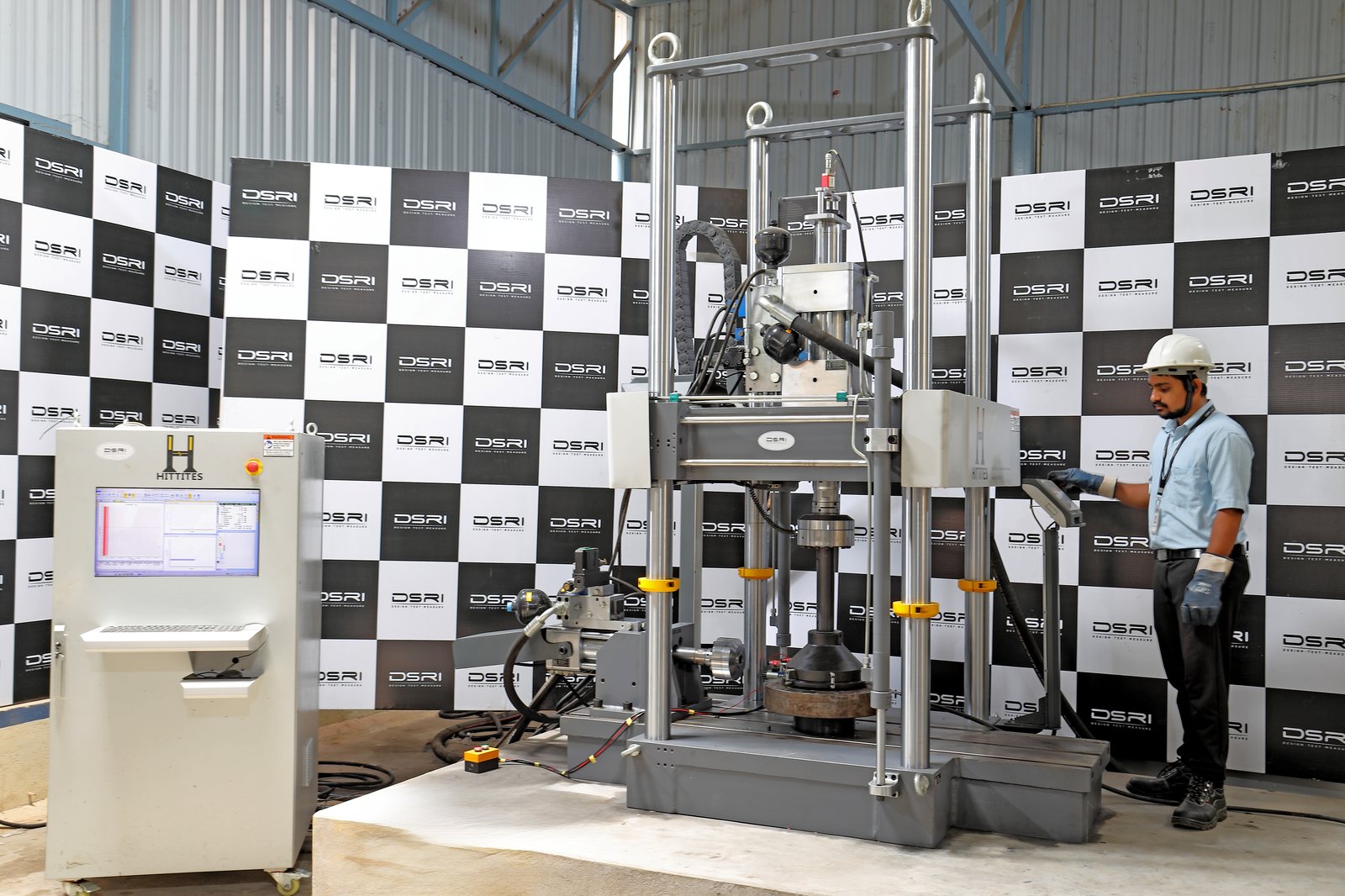
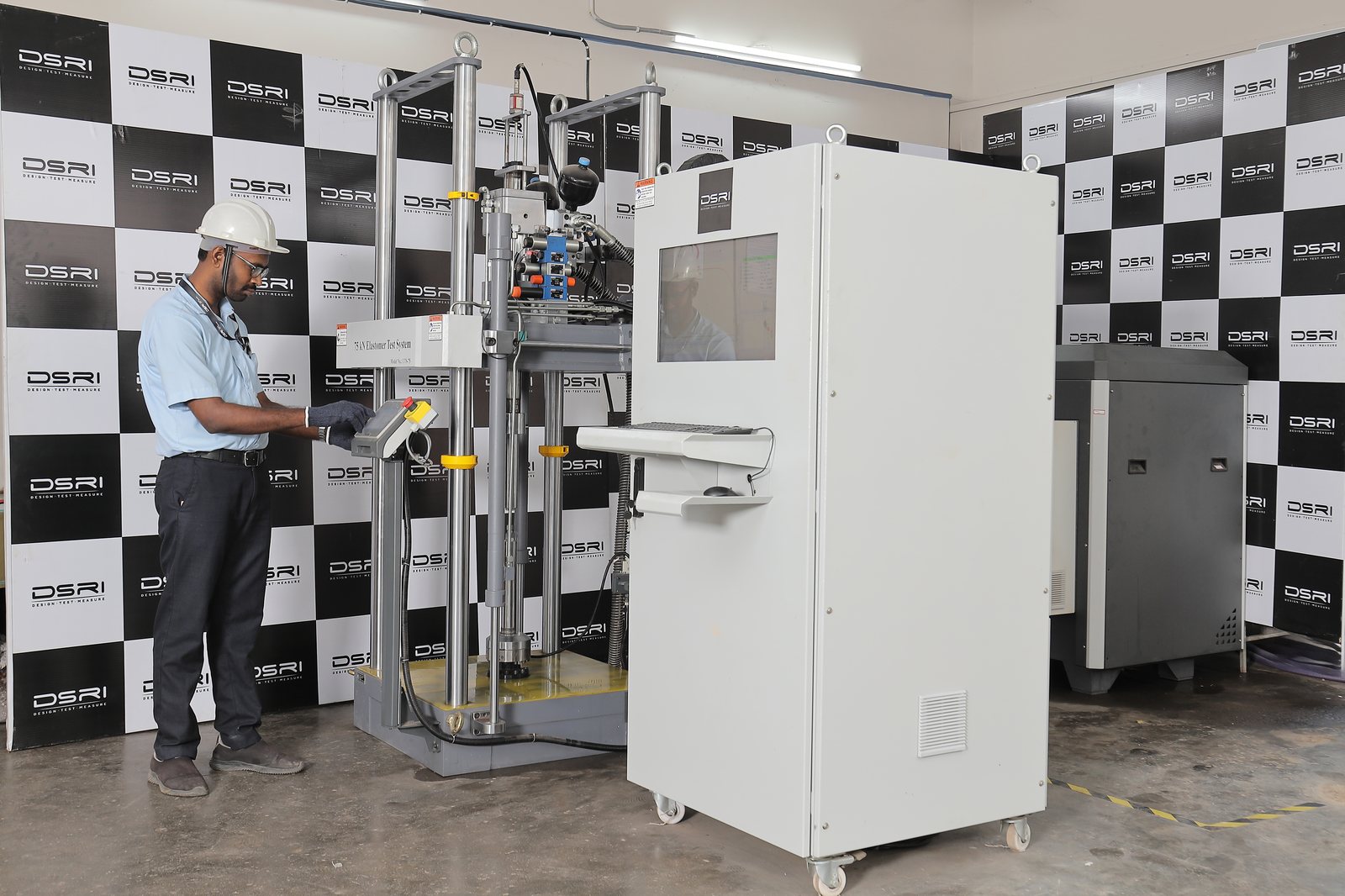
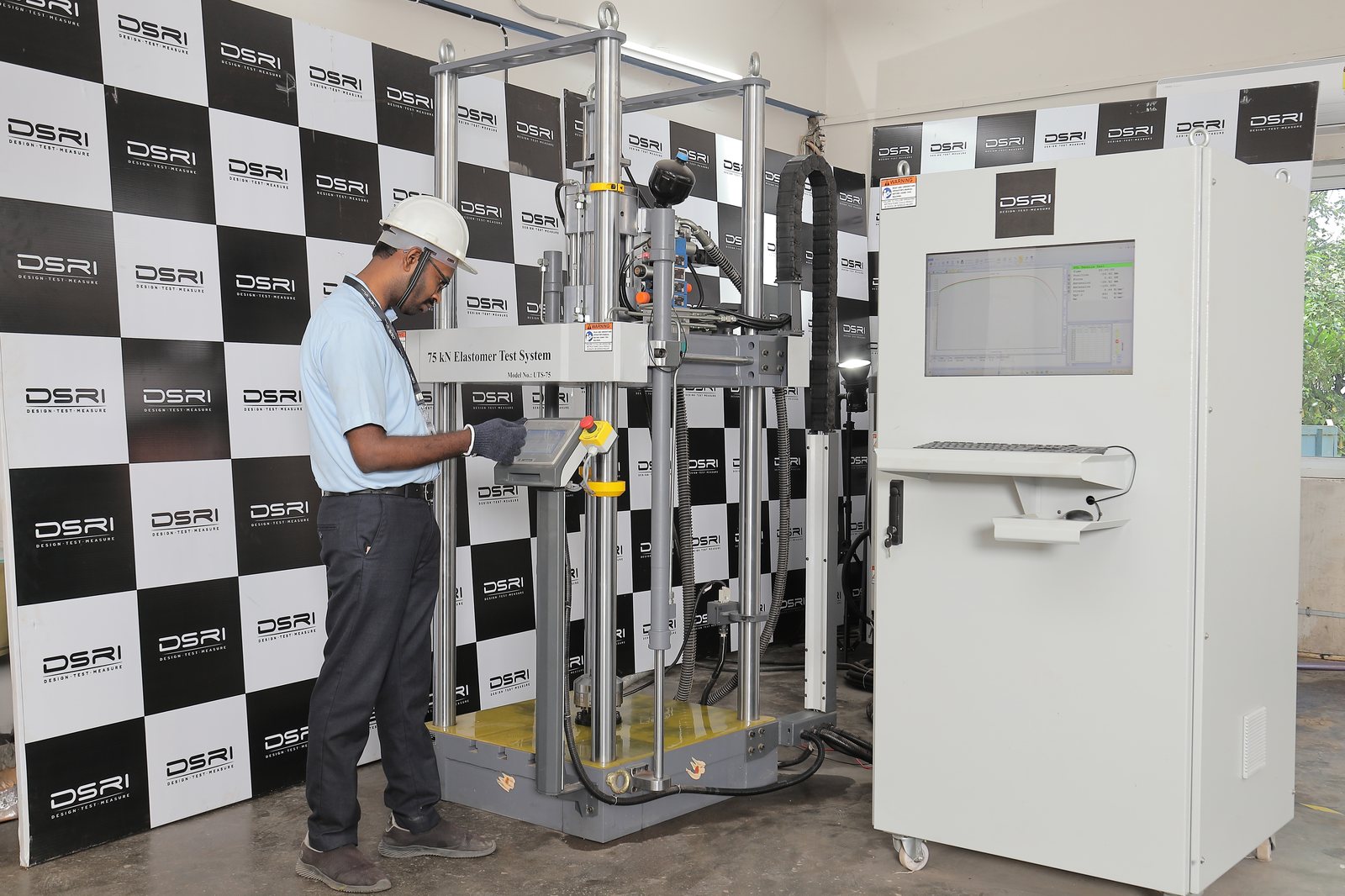
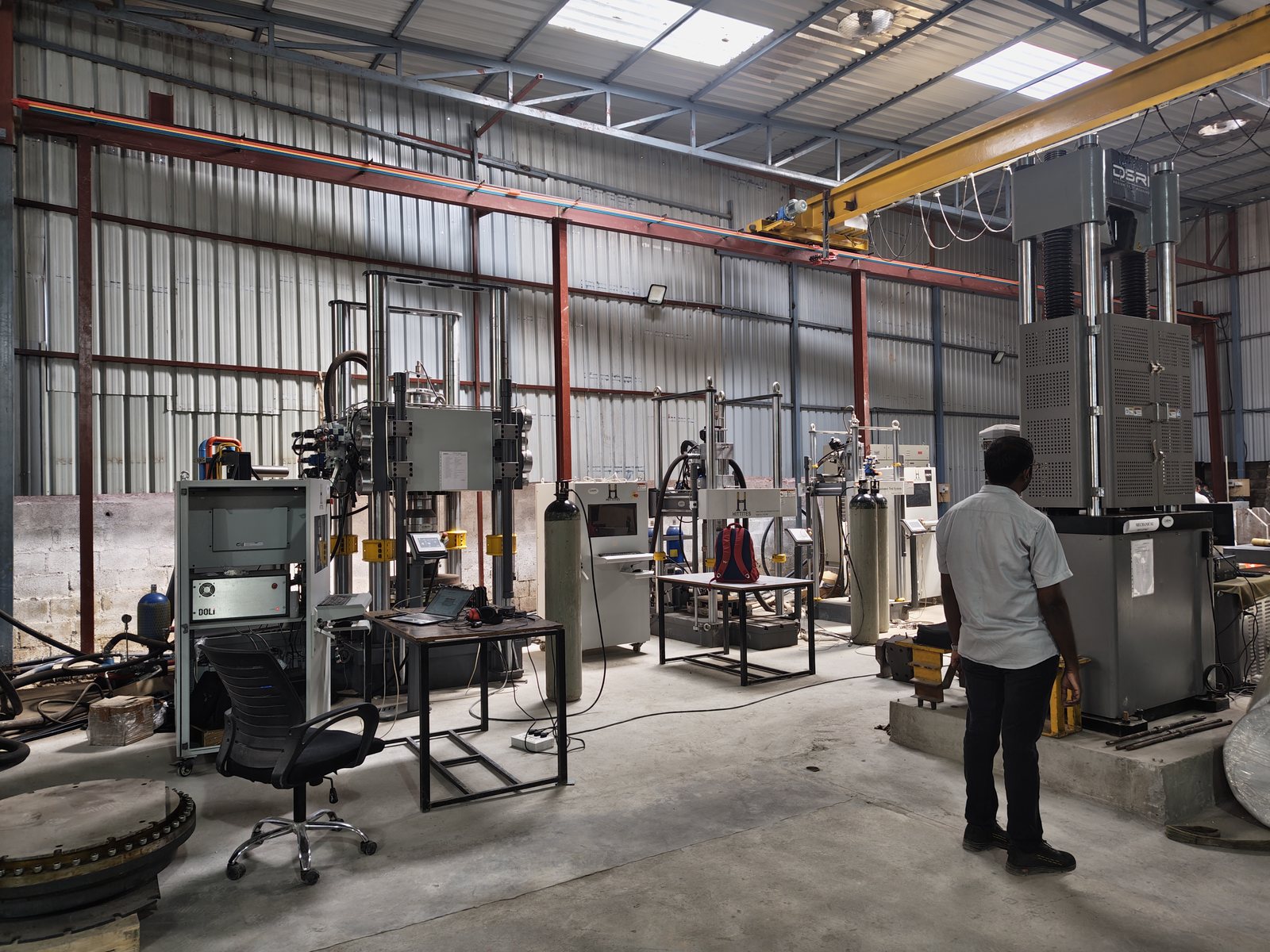
Five testing machines up to 2,500 kN, including fatigue-rated machines that are a first in India's private sector — to prove metals, bolts, rebar joints and rubber parts hold up, whether they're loaded once or a million times.
What customers bring us
Tensile, bend and fatigue certification of rebar couplers to IS 16172 for a metro project
Proof-load and wedge-tensile of aerospace fasteners to ASTM F606
Hardness, tear and compression-set of naval gasket compounds
Metals & alloys
Steel, stainless, aluminium, titanium and more — how strong they are, how far they stretch, and how long they last under repeated load.
Rebar & construction
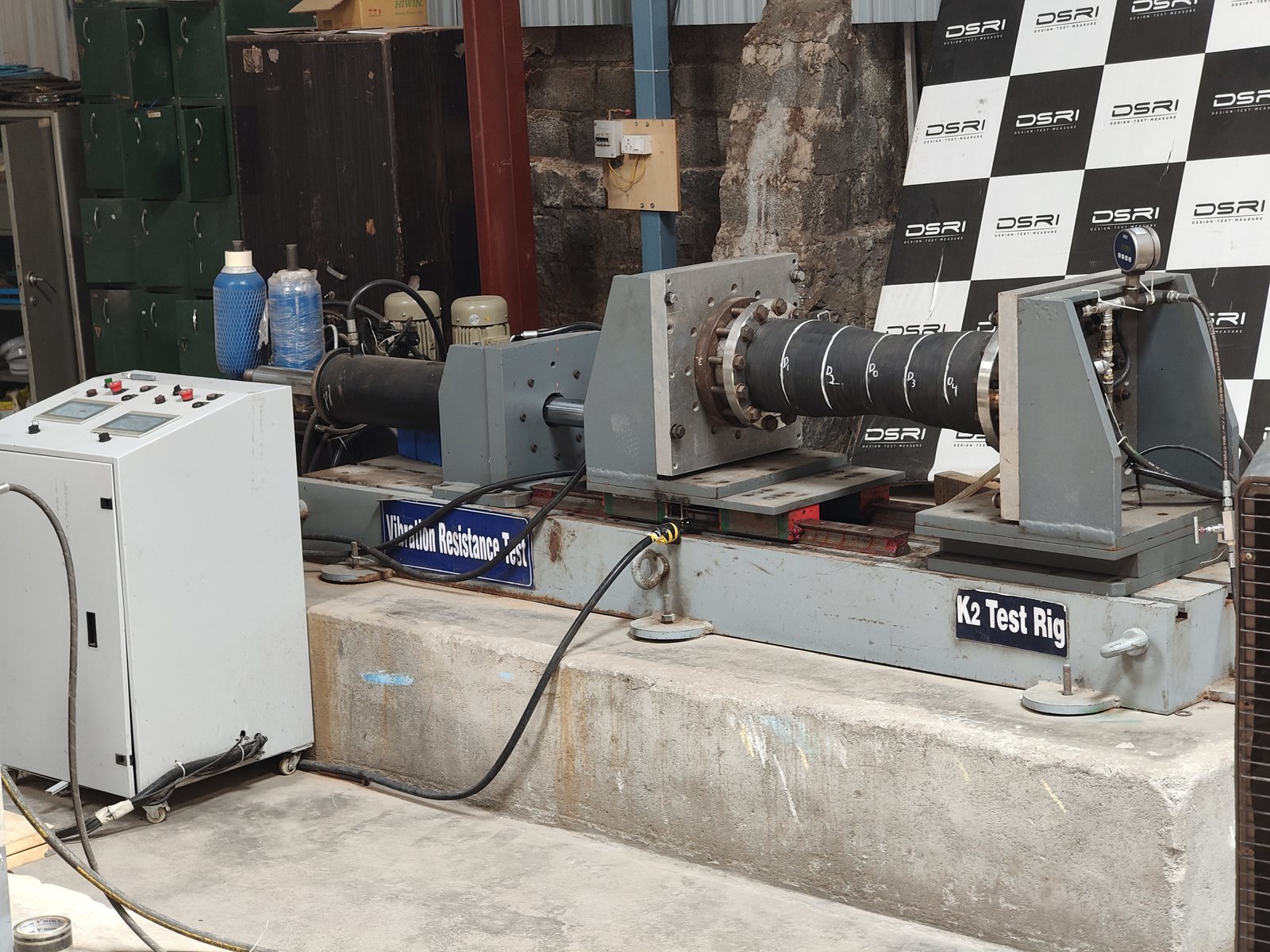
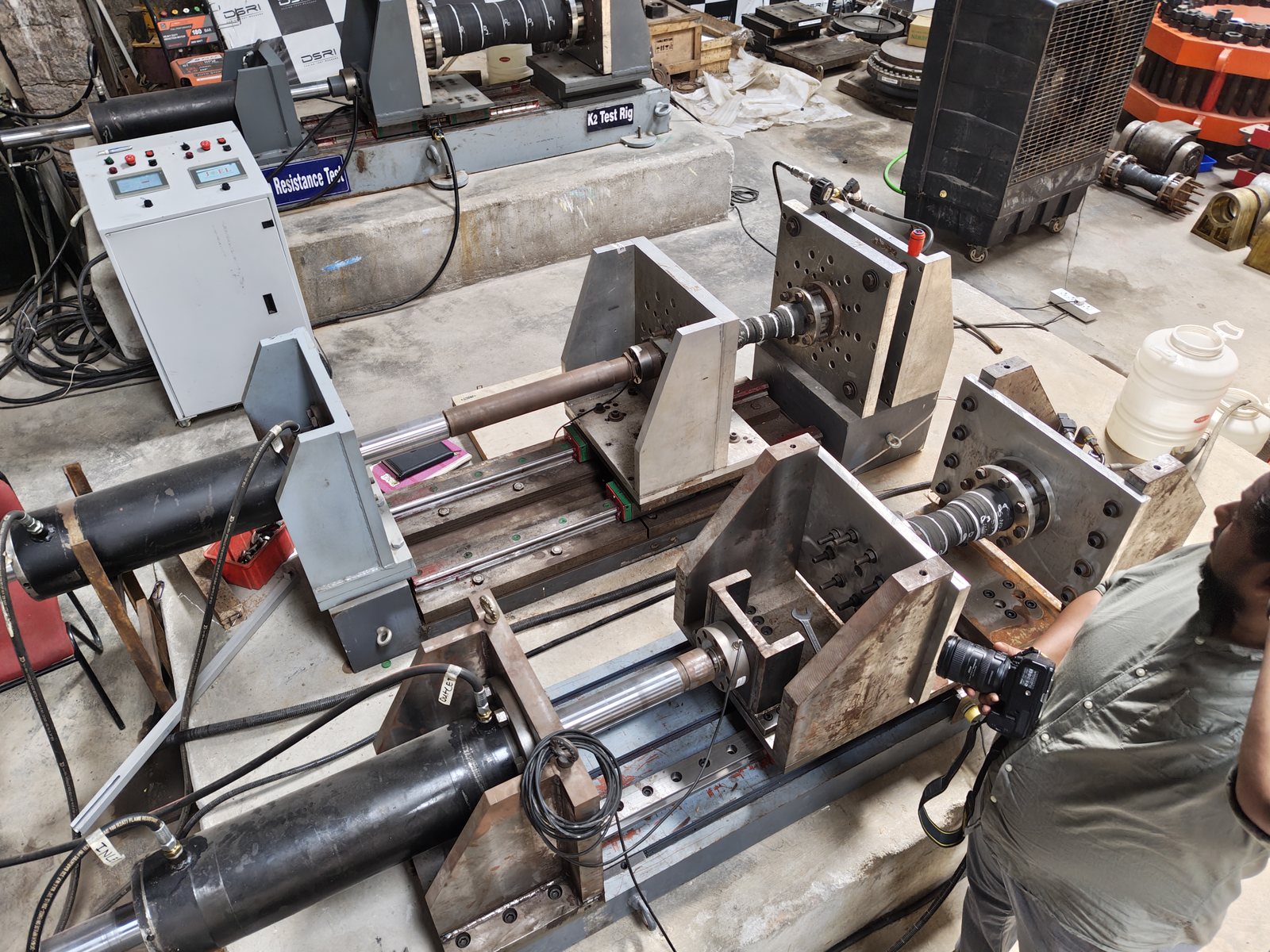
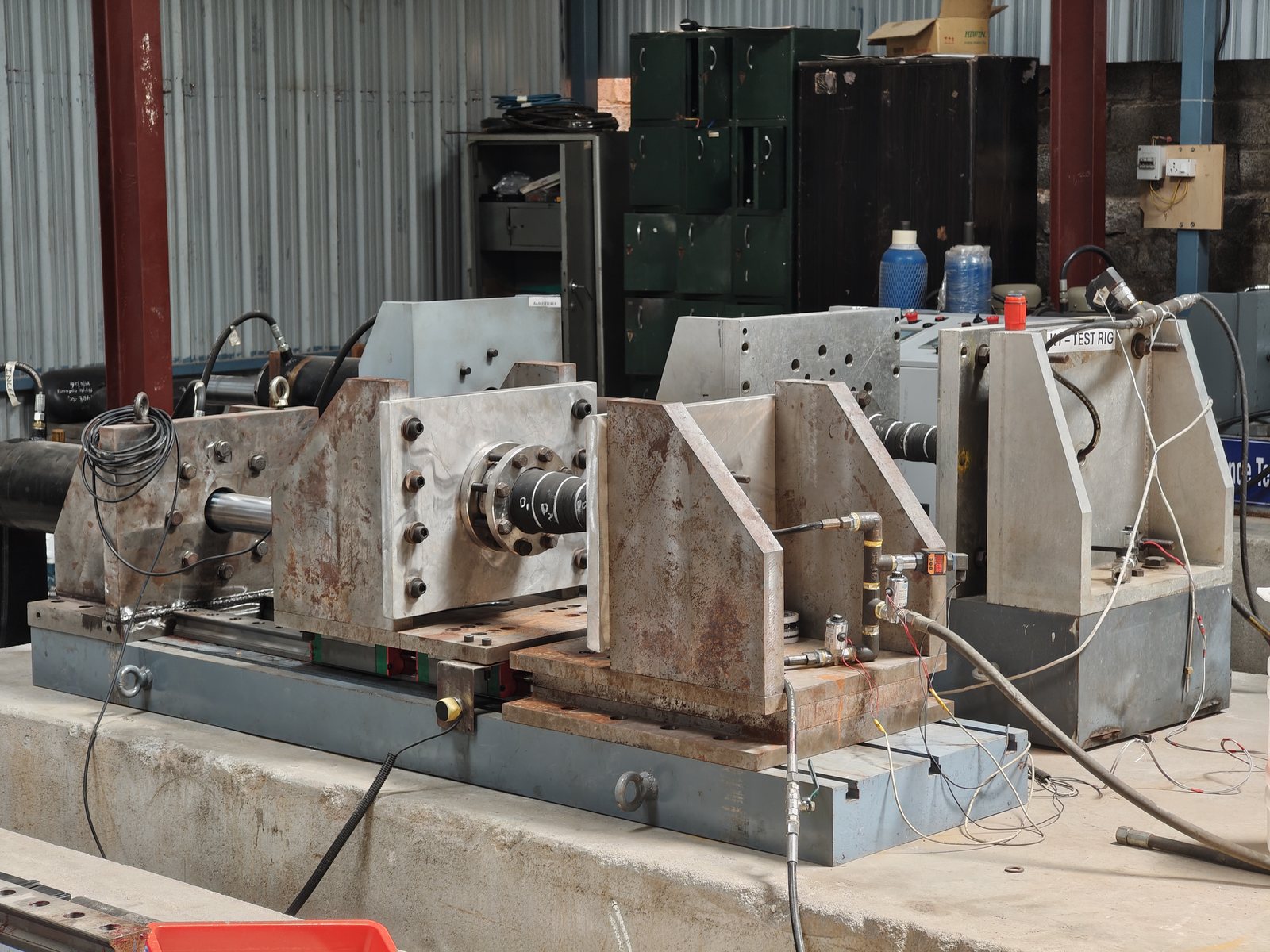
Rebar couplers for metro, bridge and building projects — the full acceptance series, on large-diameter bar.
Bolts & fasteners
Bolts, screws and studs tested as made — breaking load, proof load and fatigue, including aerospace bolts.
Rubber & seals
Seals, gaskets and mounts — hardness, stretch, tear, spring-back, cold flexibility, and conductive EMI gaskets.
What we run it on
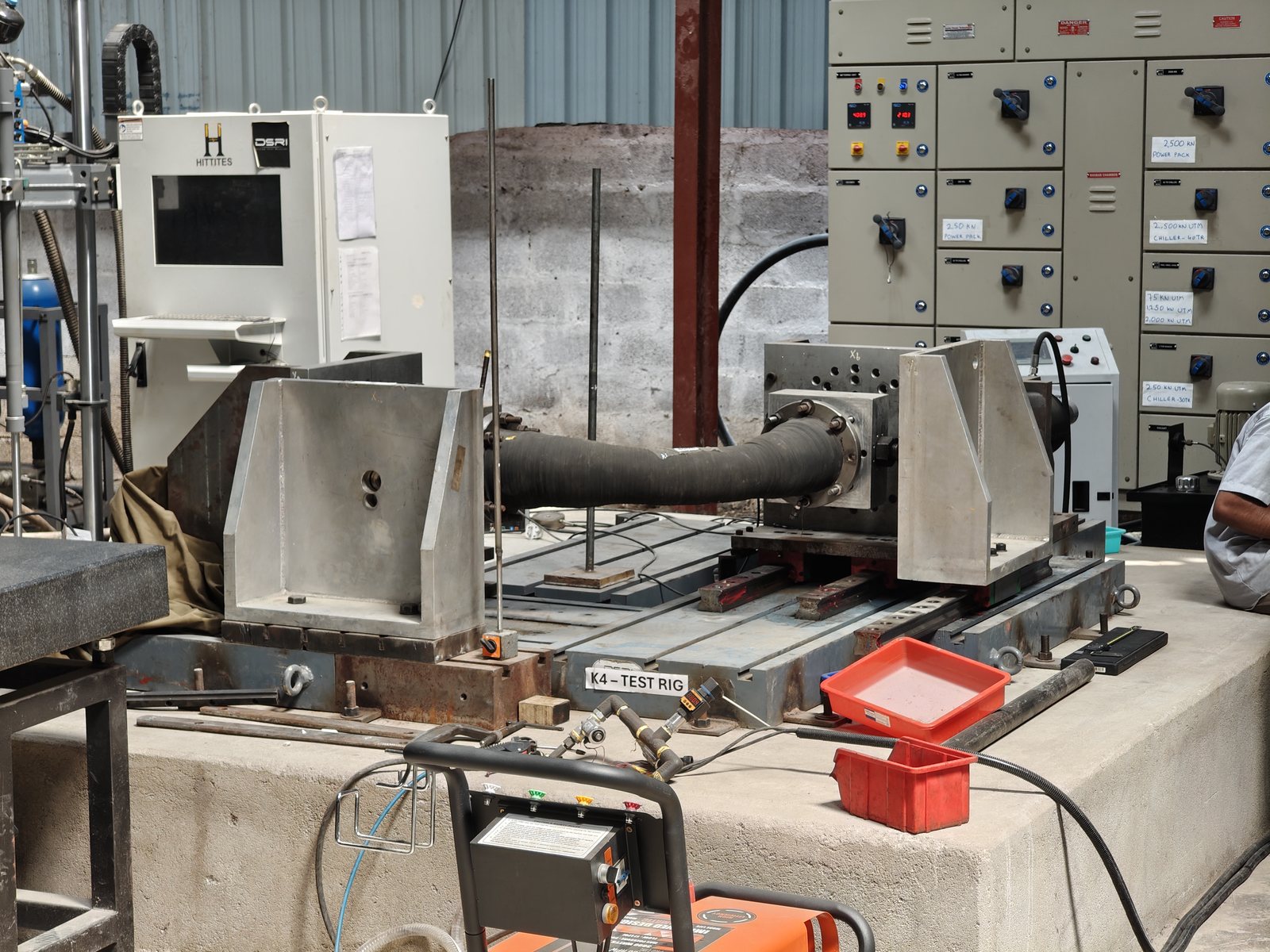
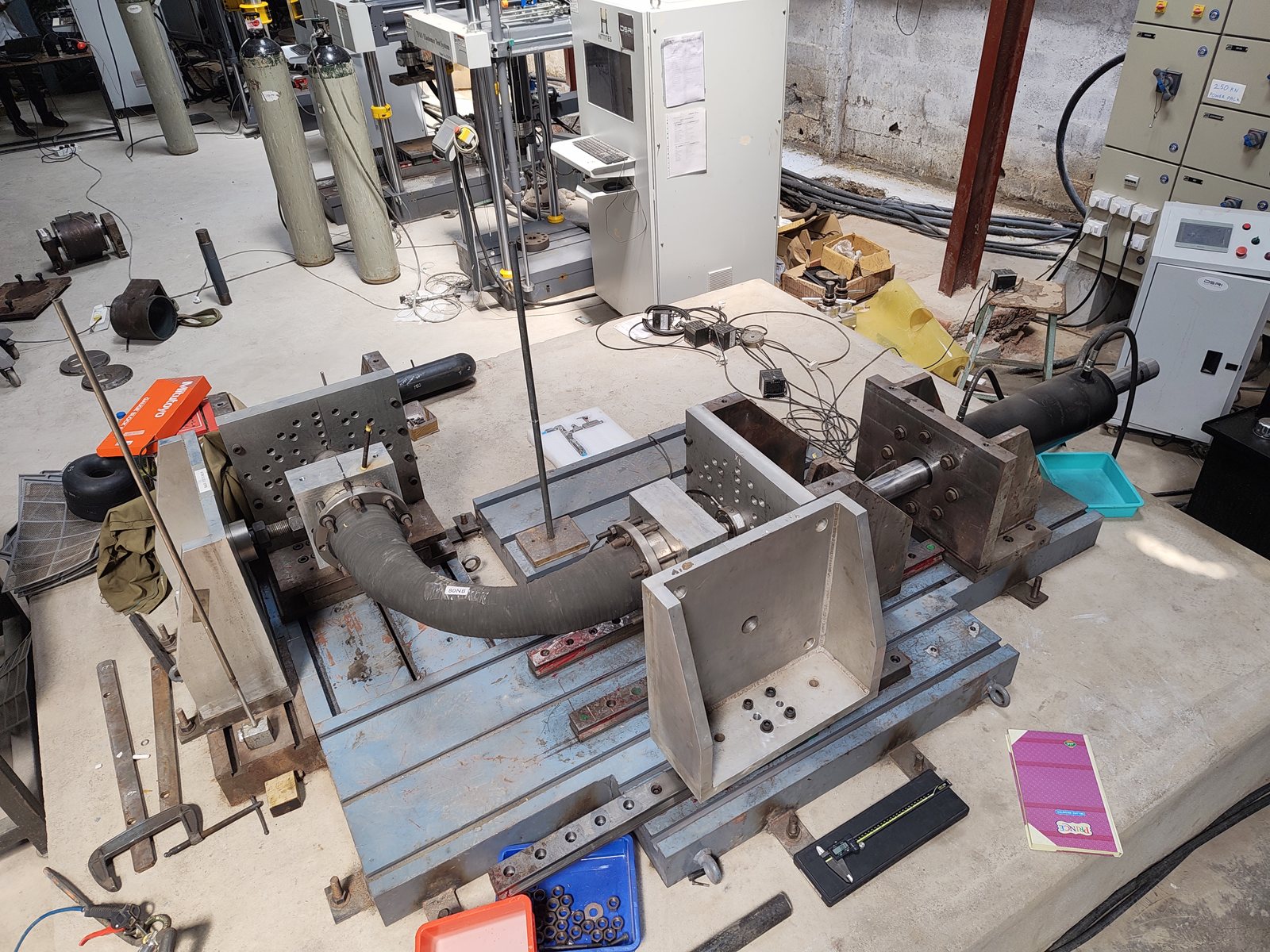
- 2,500 kN biaxial, dynamic / fatigue-rated UTM
- 250 kN biaxial, dynamic / fatigue-rated UTM
- 2,000 kN, 1,250 kN and 75 kN UTMs
- Durometers, extensometers and fixtures
Engineering alongside
Pre-test analysis, fixture design and correlation are available for every job in this lab — so a marginal design is caught in the model, not on the machine.
Engineering →Which test answers your question?
Not sure which test you need? Start with the question you're trying to answer. Every test here is NABL accredited, run on our own machines in Hyderabad. Engineers: methods, standards and reported properties are in the standards & methods reference.
Strength & stretch
How strong is it, and how far will it stretch before it breaks?
We pull a sample of your metal until it breaks and record the force the whole way. It's the test behind almost every material certificate — steel, stainless, aluminium, titanium and more.
You get- The load at which it starts to stretch for good
- The most load it can take
- How far it stretches before breaking
- How stiff it is
How much load can it carry when it's squeezed?
For parts that are pushed rather than pulled — pins, bushes, supports — we squeeze a sample between flat plates and record how it gives way.
You get- The load at which it starts to deform
- The most load it can carry
Will it crack if it's bent?
We bend a strip of the material — or a strip across a weld — around a set radius and look for cracks. A quick, visual check that the metal or the weld isn't brittle.
You get- Pass or fail against your standard
- Where the sample cracked, if it did
Repeated loading (fatigue)
Will it crack after millions of cycles in service?
Parts that vibrate or flex can fail at loads far below their strength. We load samples up and down, over and over, until they crack — or survive the number of cycles you need.
You get- How many cycles each sample survived
- A load-versus-life curve when several loads are tested
- Where it cracked
Will the bolt hold up under repeated loading?
Real bolts, not machined samples, loaded up and down in their own threads — including aerospace bolts that must survive a set number of cycles.
You get- Cycles survived at your load
- Where it failed — thread, shank or head
Will the rebar joint survive an earthquake?
Coupler joints on your own bar are loaded back and forth — lightly for millions of cycles, and hard for a few, as in an earthquake — and then pulled to failure.
You get- How much the joint slipped
- Cycles survived
- Strength left afterwards
Bolts & fasteners
Does the bolt really meet its grade?
We test bolts, screws and studs as they come: pull them to failure, hold them at their rated proof load to check they don't stay stretched, and pull them at an angle to check the head doesn't snap off.
You get- Breaking load
- Whether it passes proof load
- Where it broke
Rebar couplers
Will the coupler be accepted on site?
Mechanical couplers must pass a set series of tests before a metro, bridge or building project will use them. We run the whole series — including large-diameter bar — and report it against the project specification.
You get- Strength of the joint compared with the bar
- Stretch and slip
- Repeated-loading results
Rubber & seals
How strong and stretchy is the rubber?
Samples cut from your sheet or moulding are stretched until they break, or torn from a notch.
You get- Breaking strength
- How far it stretches
- Tear resistance
Will the seal still seal in five years?
We measure hardness, how the rubber resists squeezing, and how well it springs back after being held squeezed and heated — the main reason seals leak with age.
You get- Hardness
- Force to squeeze it
- How much it fails to spring back
Does it stay flexible in the cold?
Rubber stiffens in the cold. We chill samples in our climatic chambers and check that they still recover.
You get- Pass or fail at your temperature
Will the shielding gasket keep conducting?
Conductive gaskets that shield electronics are checked for electrical resistance — as made, and after ageing and flexing — to the military specification.
You get- Electrical resistance
- Whether it stays stable after ageing
- Life-test result
Technical detail for engineers — methods, standards, reported properties →
Measure the part, not just the machine
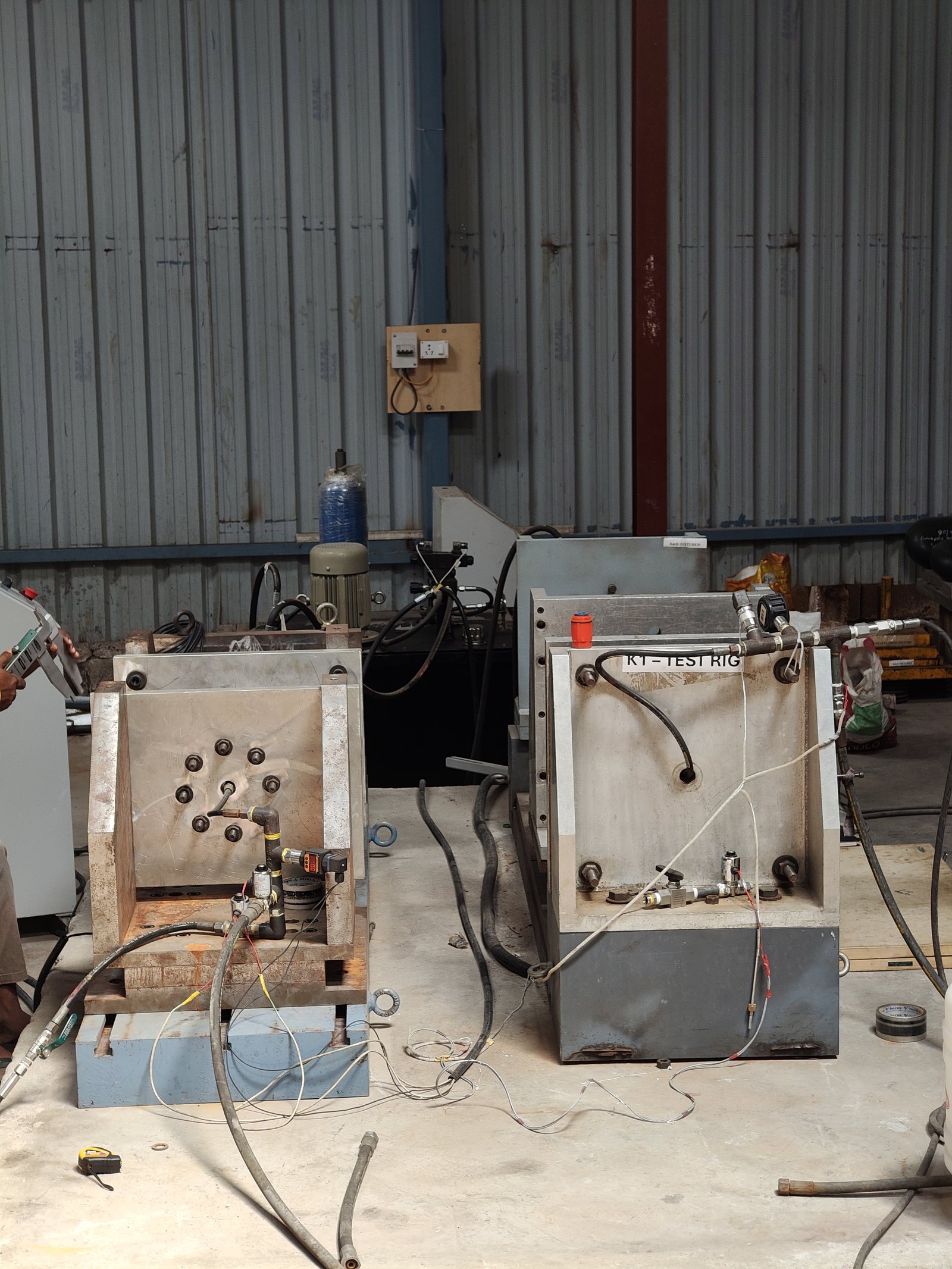
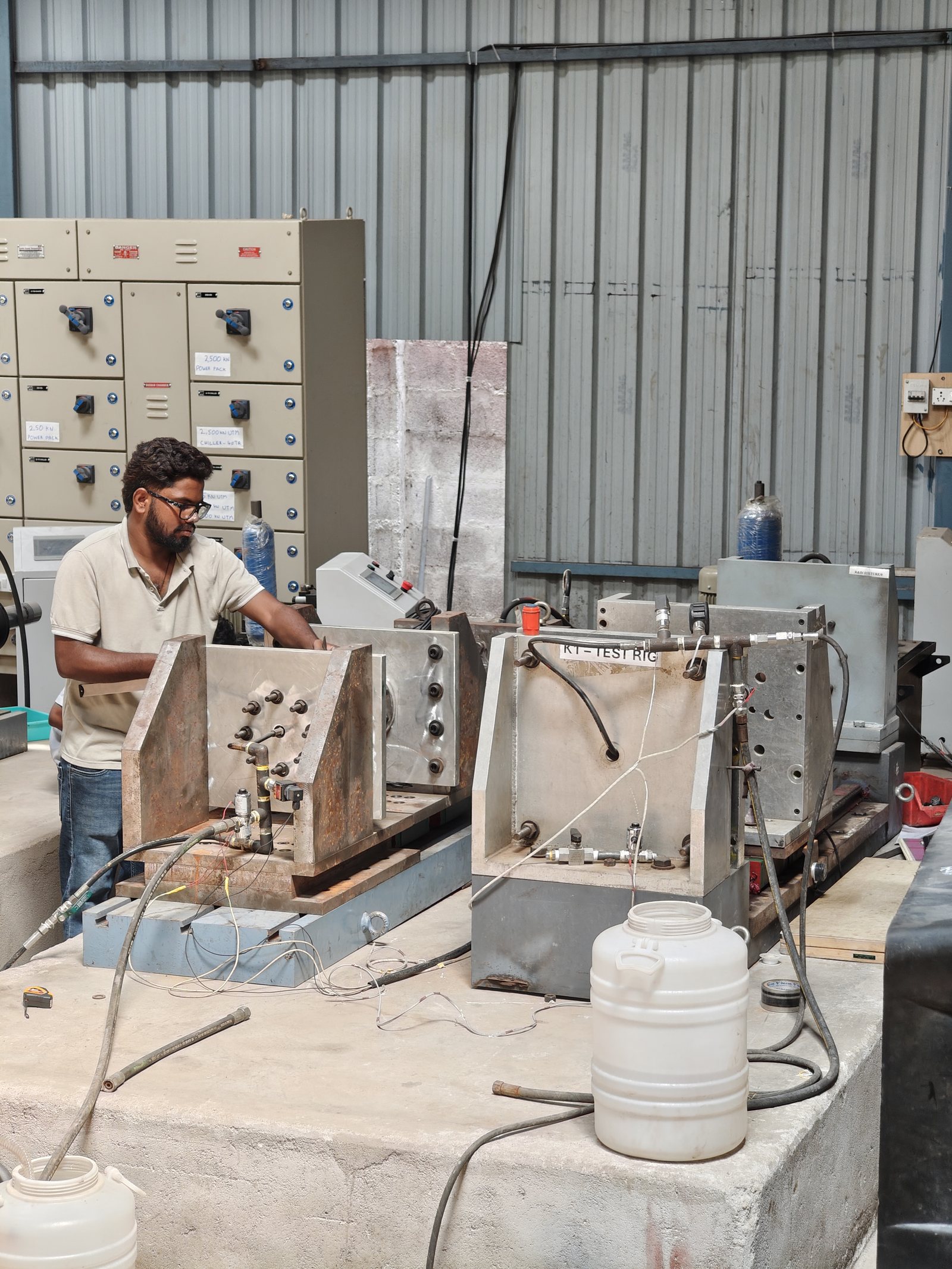
The testing machine tells you the load. To see what is happening inside your part, we fix strain gauges and other sensors to it and record up to 80 channels at once, in step with the machine's load and cycle count. You see where stress builds up, and how it changes as a crack starts and the part begins to fail.
Plan an instrumented test- Strain, displacement and temperature on your actual component through a fatigue test
- Useful for assemblies — brackets, joints, welded structures — not just coupons
- Up to 80 channels, all on one clock, lined up with the test machine's own signals
- Sampling at up to 1 million samples a second, per channel — fast events aren't missed
- Dewesoft and HBK LAN-XI acquisition modules
Dewesoft, HBK and LAN-XI are trademarks of their respective owners, named only to identify the equipment we use; no endorsement or affiliation is implied.
From specimen to signed report
Method review
We confirm the standard and clause, specimen geometry, number of specimens, test temperature and acceptance criteria before we quote.
Receipt & identification
Specimens are logged against your requisition, marked, and measured — dimensions are recorded before any load is applied.
Machine set-up
We choose the machine for the expected load and fit the grips and measuring equipment — all calibrated and checked before your sample goes in.
Testing
Force, stretch and cycles are recorded continuously, at the speed the standard sets. Progress photos appear in your customer portal as the test runs.
Report
Results against the standard, curves and failure locations — under the NABL symbol where the method is accredited. Photographs in the report on request.
What to send for a quotation
- Material, grade and product form (bar, plate, casting, fastener, sheet)
- Standard and clause — and your acceptance criteria, if you need a pass / fail
- A specimen drawing — or just send the raw material (bar, plate, forging, weld coupon) and we'll machine the specimens
- How many samples — we'll tell you the minimum your standard needs
- For fatigue or coupler work: the loads and number of cycles you need, and the bar size
Who we test for
Mechanical & materials work feeds qualification programmes across these sectors — each page shows the standards and problems we see most.
For engineers: the full method table, standards and equipment ranges for this lab are under For engineers → Methods & standards and Equipment & ranges.
Questions we get about mechanical & materials work
Can we witness the test?
Yes. Tell us at enquiry and we'll book a witness slot. Third-party inspectors are welcome too — RITES, Lloyd's Register, CQAE, IRS, ABS, RINA and other agencies witness tests here.
Can you machine the specimens?
Yes. Send the raw material — bar, plate, forging or weld coupon — with the drawing or the standard, and we machine the specimens to it.
How soon do we get results?
We reply to enquiries within one working day. Tensile and fatigue results are available as soon as the test finishes, and the report follows within a working day. When we can start depends on machine availability, which we confirm with the quotation.
Why are some tests accredited and some not?
Our accredited methods are the ones customers ask for most, so we keep them under regular NABL assessment and report them under the NABL symbol. Non-accredited work is usually a custom, rare or specialised method — or one we develop for your problem — reported without the NABL symbol.
Ready to quote mechanical & materials work?
Send the standard, the profile and the unit size — we'll confirm the machine and the schedule.