Prove valves, fittings and hoses hold, flow and last — on liquids and gases.
Valves, pipe fittings and hoses up to 400 NB, tested on water, oil, air and nitrogen at the pressures your specification sets — do they hold pressure, flow as specified, keep working for thousands of cycles, and survive a fire?
What customers bring us
Hydrostatic proof and seat-leak tests on shipboard valves to NES 375 / BS 4368
Cv characterisation of control valves to ANSI/ISA-75
Life-cycle endurance of actuated valves to AWWA C504
Liquids
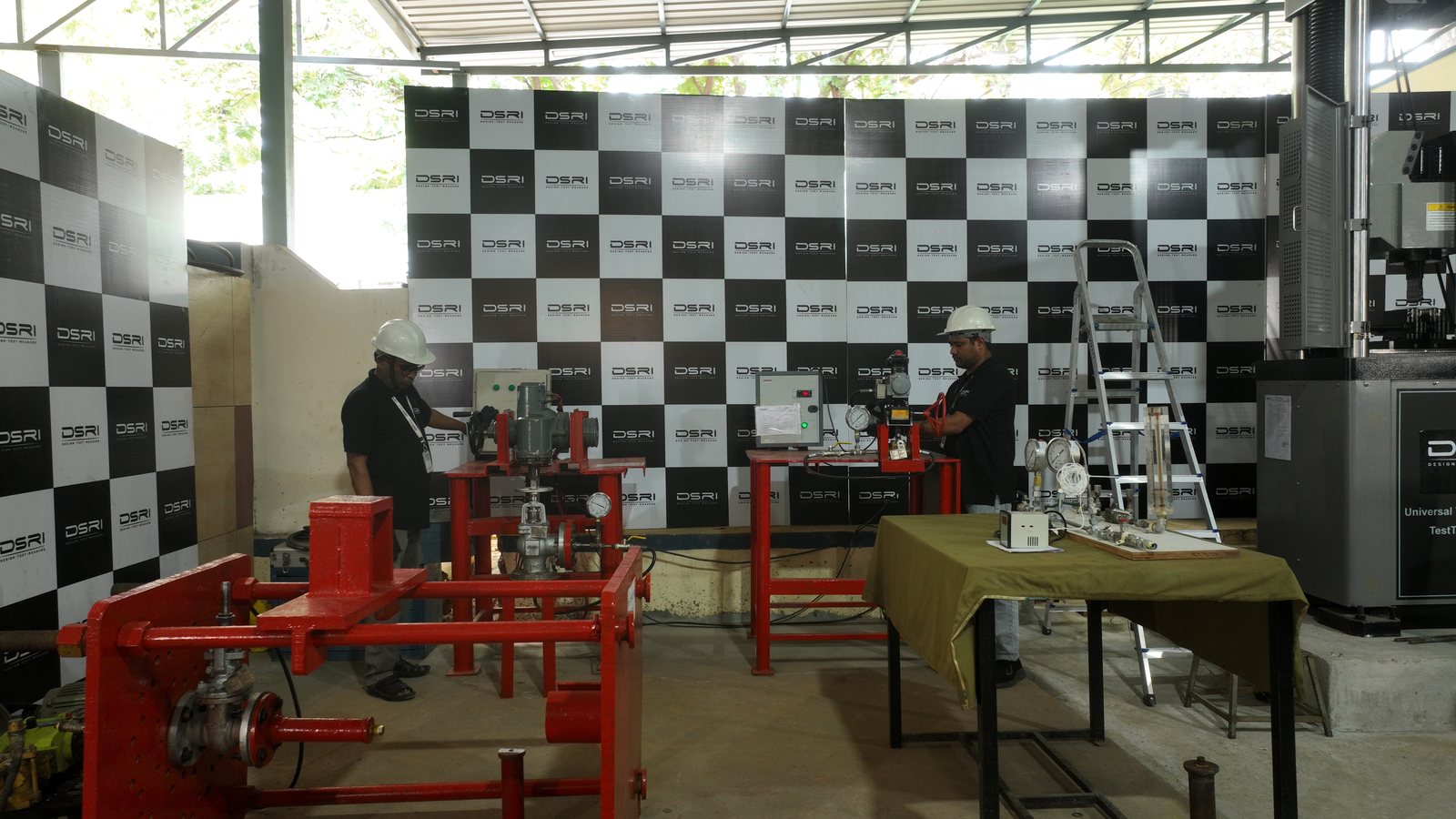
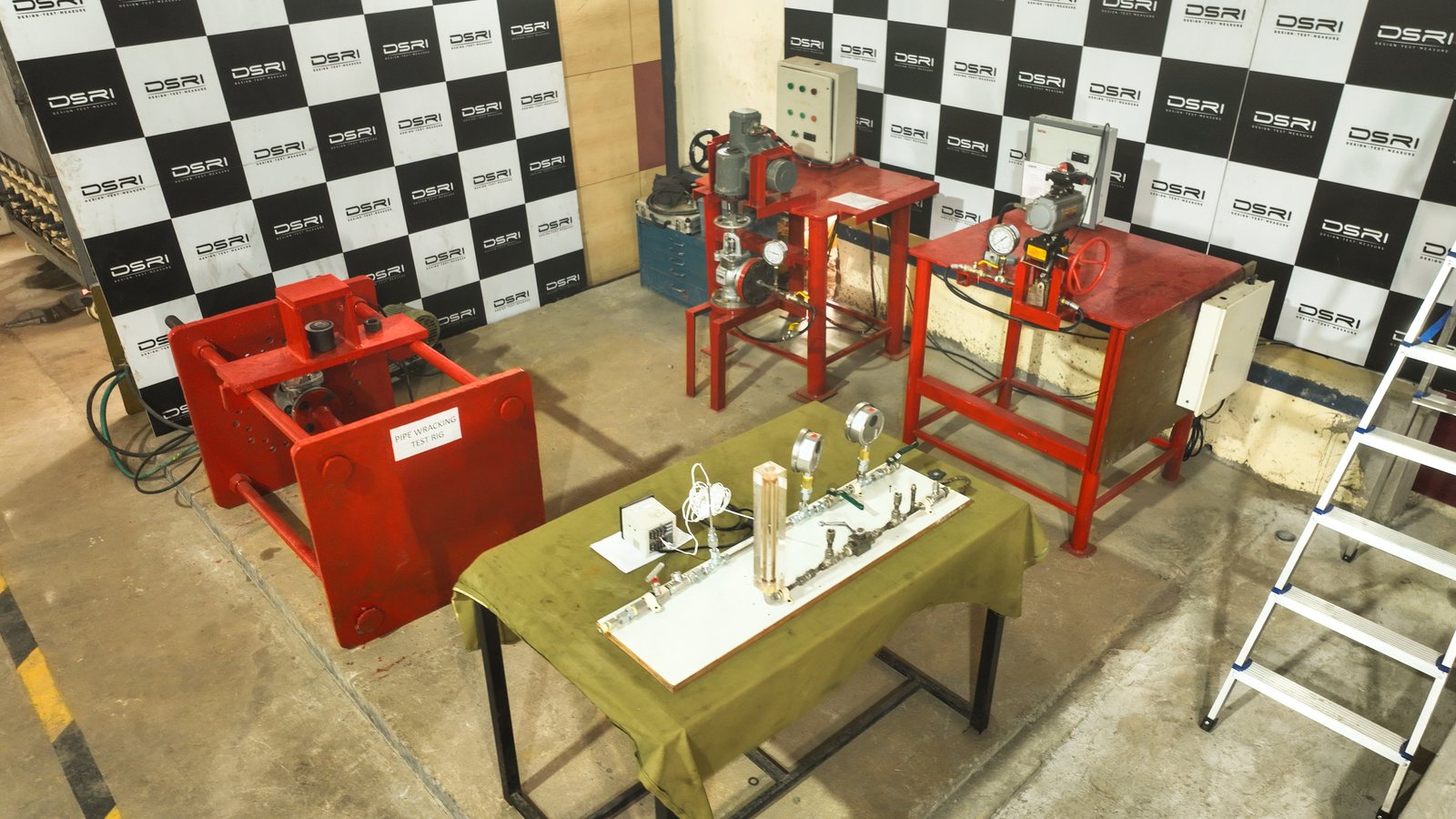
Water and oil — pressure and leak, burst, flow, life cycle, pipe wracking and fire tests.
Air & gases
Air and nitrogen — pressure and leak, burst, flow, life cycle, dismantling and reassembly.
What we run it on
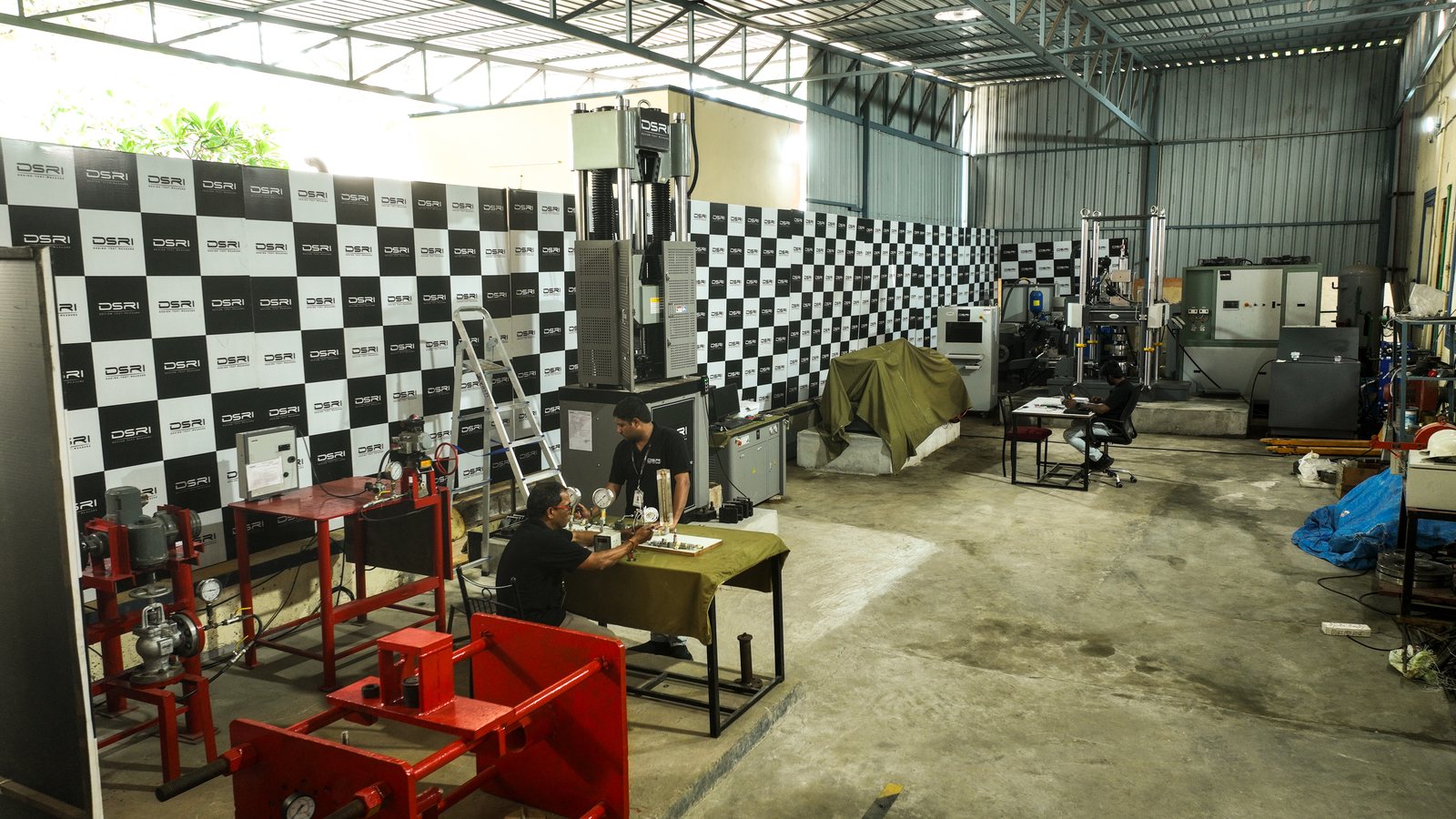
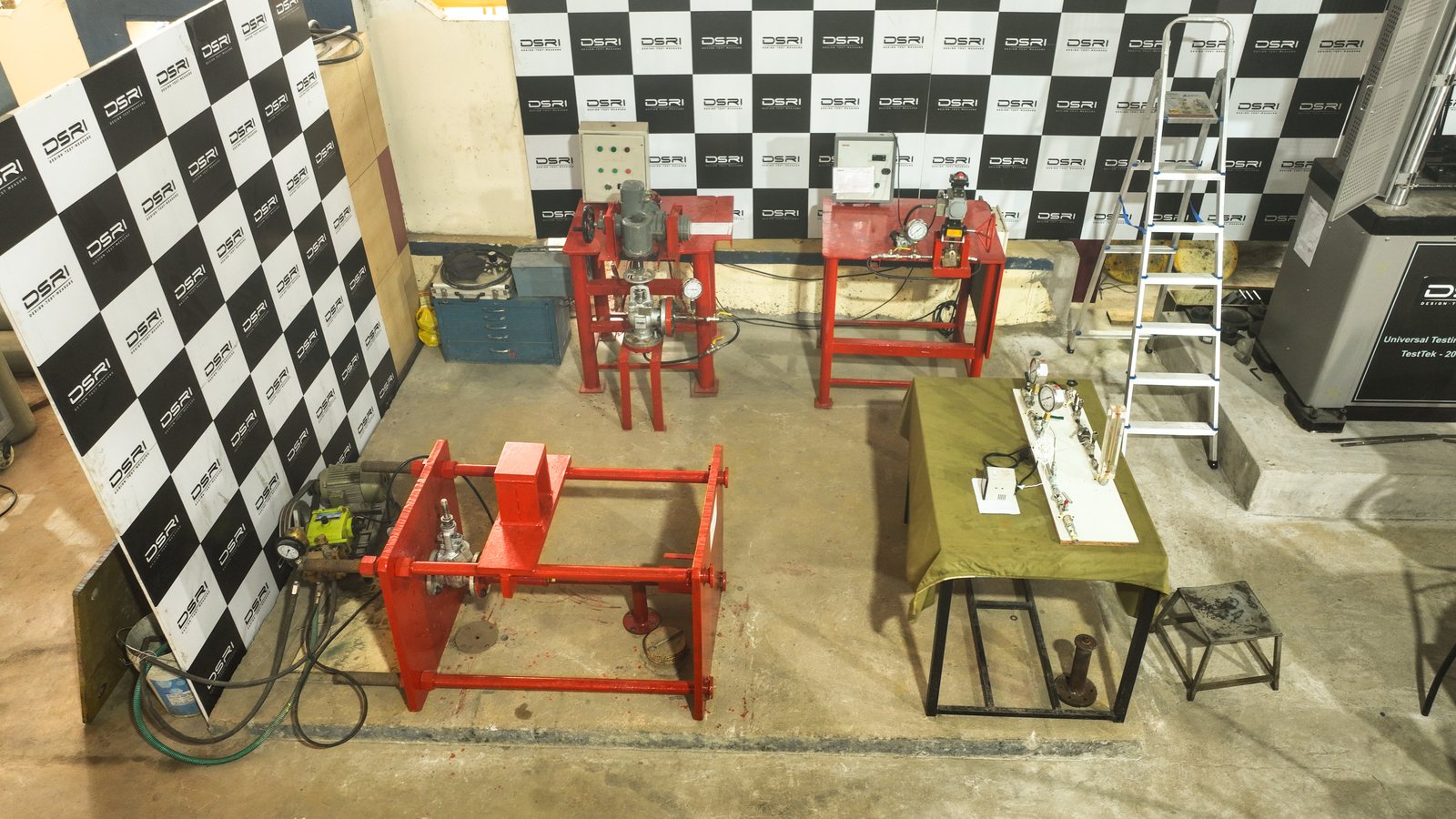
- Hydraulic and pneumatic test rigs
- Flow-coefficient loop
- Burst and life-cycle stands
Engineering alongside
Pre-test analysis, fixture design and correlation are available for every job in this lab — so a marginal design is caught in the model, not on the machine.
Engineering →Which test answers your question?
Not sure which test you need? Start with the question your customer or inspector will ask about the valve or fitting. Every test here is NABL accredited, run on our own rigs in Hyderabad. Engineers: methods, standards and reported properties are in the standards & methods reference.
Pressure & leaks
Does it hold pressure without leaking?
We fill it with water or oil, raise the pressure to what the standard sets, hold it there, and check the body and the closed valve for leaks.
You get- Whether it held, and for how long
- Any leakage found
Does it hold gas tight?
Gas finds leaks that water can't. We pressurise it with air or nitrogen and look for the smallest leak.
You get- Whether it held, and for how long
- Any leakage found
How much pressure before it bursts?
We raise the pressure well past what it's rated for, to prove the margin — or find where it gives way.
You get- The pressure it reached
- Where it failed, if it did
Flow & life
How much does it really let through?
A valve's flow rating decides whether the system works. We measure what actually flows through yours at each opening.
You get- The measured flow rating
- How flow changes as it opens
Will it still seal after thousands of operations?
We open and close it again and again under pressure — as many times as your standard sets — and keep checking it still seals.
You get- How many cycles it completed
- Whether it still sealed along the way
Fittings & fire
Does it still seal after being taken apart and re-made?
Fittings get opened for maintenance. We take yours apart and put them back together, then check they still seal.
You get- How many times it was re-made
- Whether it still sealed
Will it keep sealing when the ship's structure flexes?
A ship's hull flexes at sea and takes the pipework with it. We bend the joint back and forth under pressure and check it holds.
You get- How far and how often it was bent
- Whether it held
Will it hold in a fire?
Valves in plants and ships must keep a fire from spreading through the pipework. We put yours in a fire under pressure and measure what leaks — the test behind a fire-safe rating.
You get- Leakage during and after the fire
- Whether it still operates
Technical detail for engineers — methods, standards, reported properties →
From specimen to signed report
Test plan
We confirm the tests, pressures, media and sequence, and check your valve or fitting suits our rigs.
Receipt & set-up
Your item is logged on its QR custody label, inspected and fitted to the rig with the right end connections.
Testing
Pressure, flow and cycles are recorded as each test runs. Progress photos appear in your customer portal.
Report
Results against the standard — under the NABL symbol where the method is accredited. Photographs in the report on request.
What to send for a quotation
- The item: type, size (up to 400 NB), pressure class and end connections — a drawing helps
- The standard and clause — pressures, hold times, cycles and allowable leakage
- The test medium: water, oil, air or nitrogen
- Adaptors or end fittings — supplying your own keeps the cost down; if you can't, we'll arrange them
- How many items
Who we test for
Fluid flow test lab work feeds qualification programmes across these sectors — each page shows the standards and problems we see most.
For engineers: the full method table, standards and equipment ranges for this lab are under For engineers → Methods & standards and Equipment & ranges.
Questions we get about fluid flow test lab work
Can we witness the test?
Yes. Tell us at enquiry and we'll book a witness slot. Third-party inspectors are welcome too — RITES, Lloyd's Register, CQAE, IRS, ABS, RINA and other agencies witness tests here.
What sizes and pressures can you test?
Valves and fittings up to 400 NB. Test pressures are set to your specification — tell us the pressure class and the standard, and we'll confirm the rig.
Which fluids can you test with?
Water and oil for liquid tests; air and nitrogen for gas tests. Tell us the medium your standard or customer requires.
Do we need to supply adaptors?
It helps. Supplying your own adaptors or end fittings keeps the cost down; if you can't, we'll arrange them.
How long does it take?
We reply to enquiries within one working day. The test takes as long as the standard sets, and the report follows within 2–3 working days of the test. When we can start depends on rig availability, which we confirm with the quotation.
Why are some tests accredited and some not?
Our accredited methods are the ones customers ask for most, so we keep them under regular NABL assessment and report them under the NABL symbol. Non-accredited work is usually a custom, rare or specialised method — or one we develop for your problem — reported without the NABL symbol.
Ready to quote fluid flow test lab work?
Send the standard, the profile and the unit size — we'll confirm the machine and the schedule.