
Prove it survives vibration, shock and motion — and learn where the margin is.
Shakers up to 16,000 kgf — the largest in India's private sector — with shock, bump, drop, centrifuge and ship-motion machines, to prove your equipment survives transport and service on land, at sea and in the air.
What customers bring us
Qualify a 19-inch rack to JSS 55555 Test 28 and Test 24 before FAT
Random-vibration and shock screening of avionics LRUs to MIL-STD-810H 514.8 / 516.8
Ship-motion and inclination trials for shipboard consoles without a sea trial
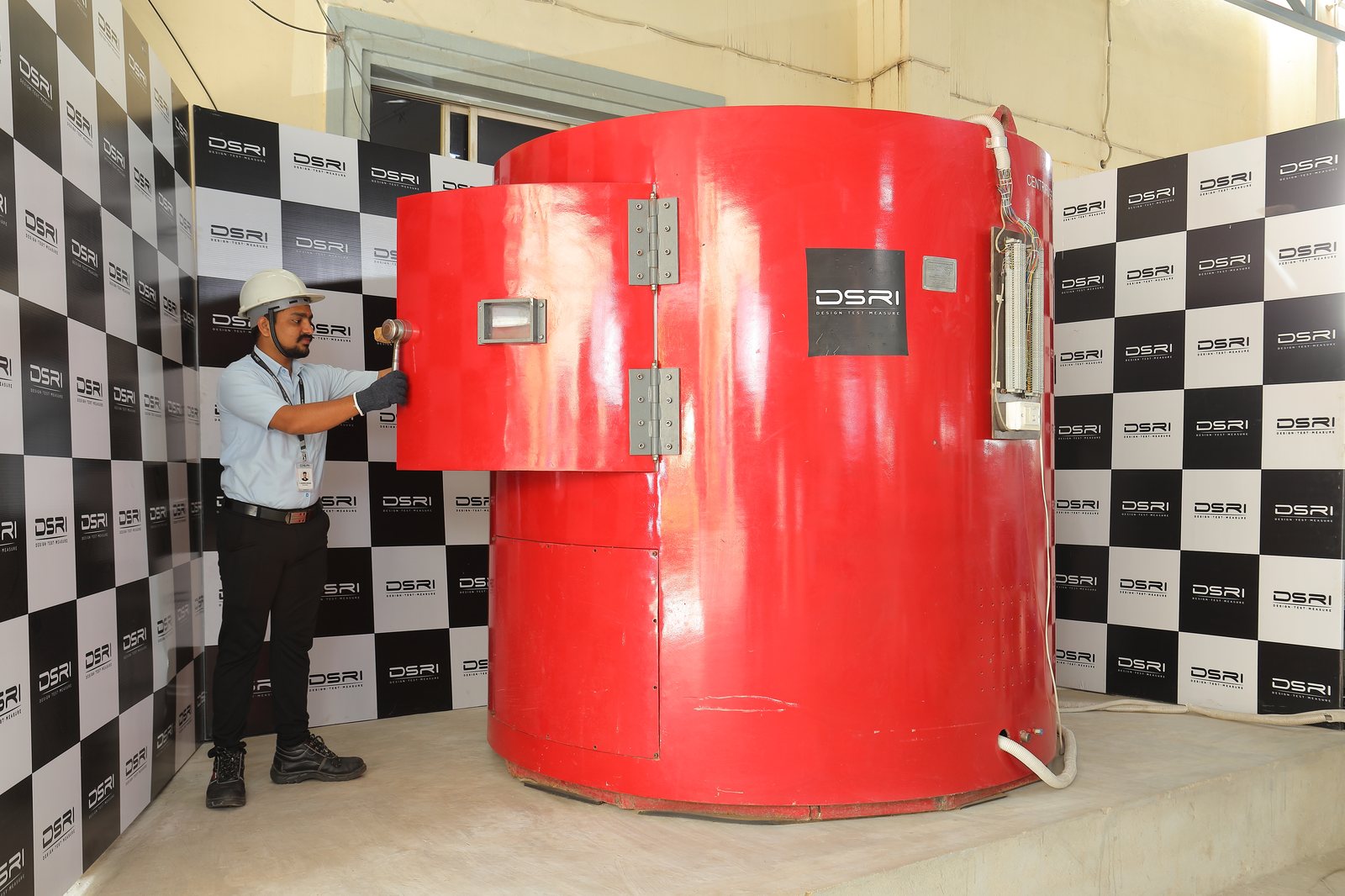
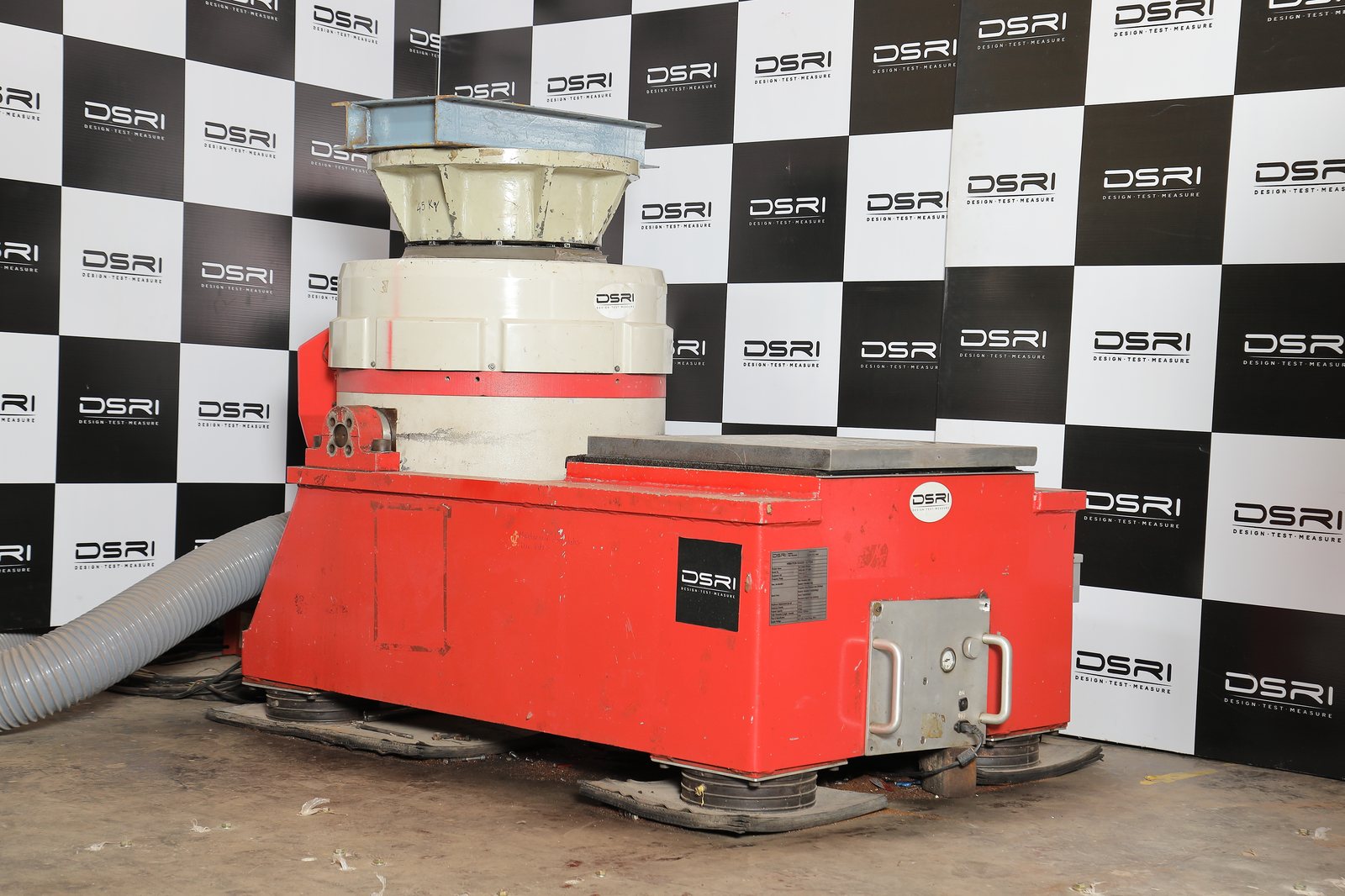
What we run it on
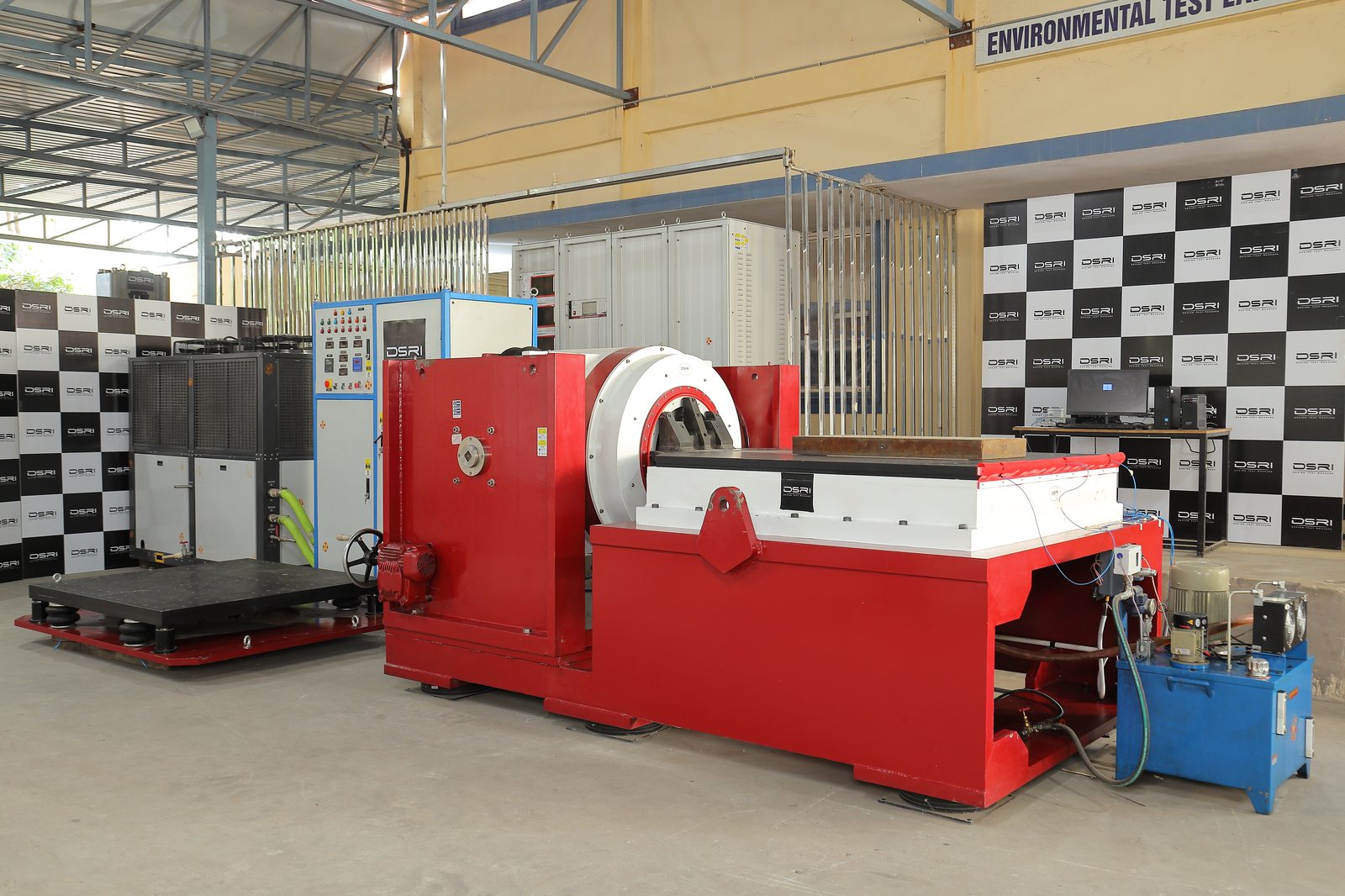
- 16,000 kgf & 4,000 kgf electrodynamic shakers with slip tables
- LDS shaker
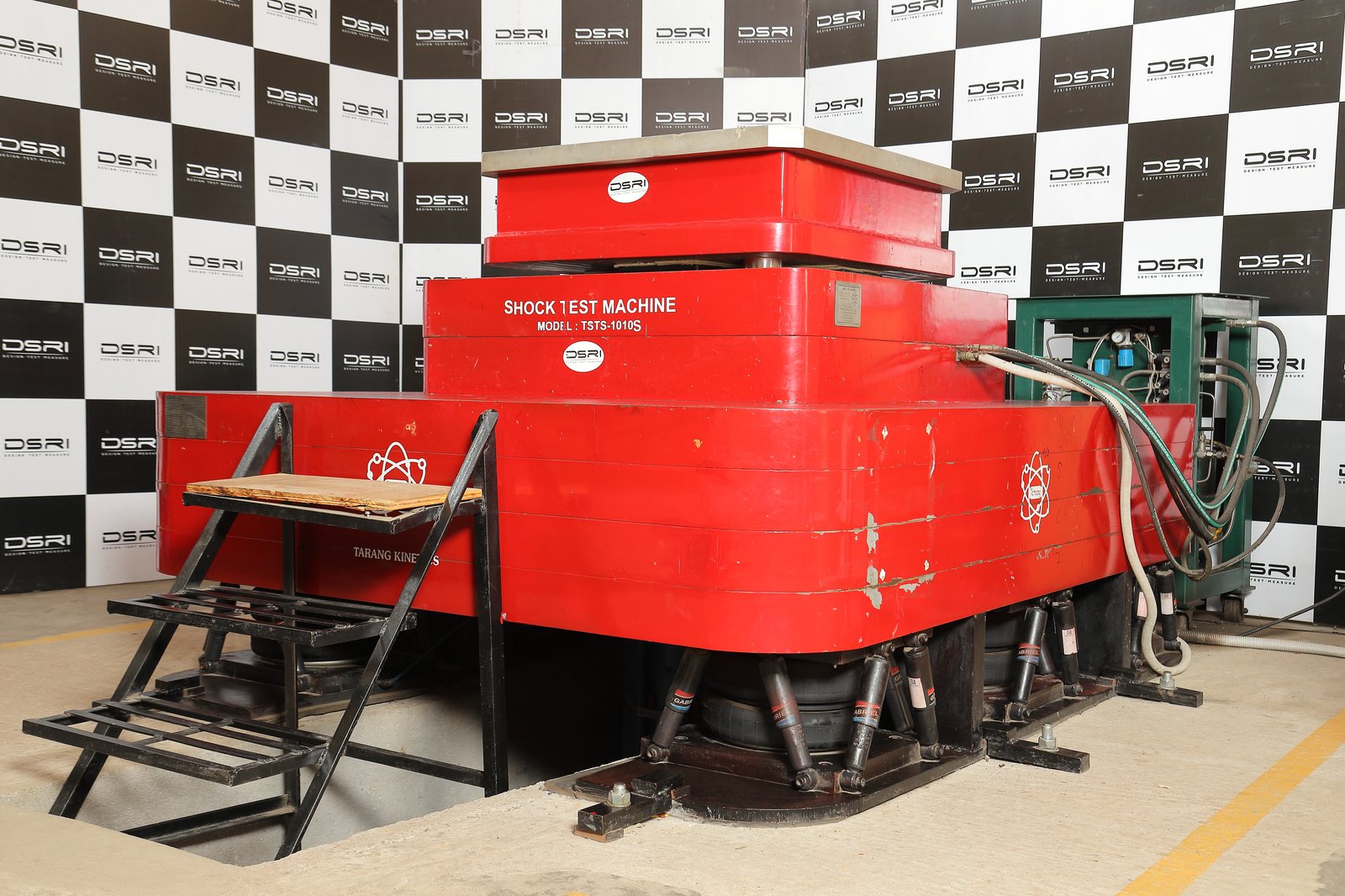
- Shock test machine
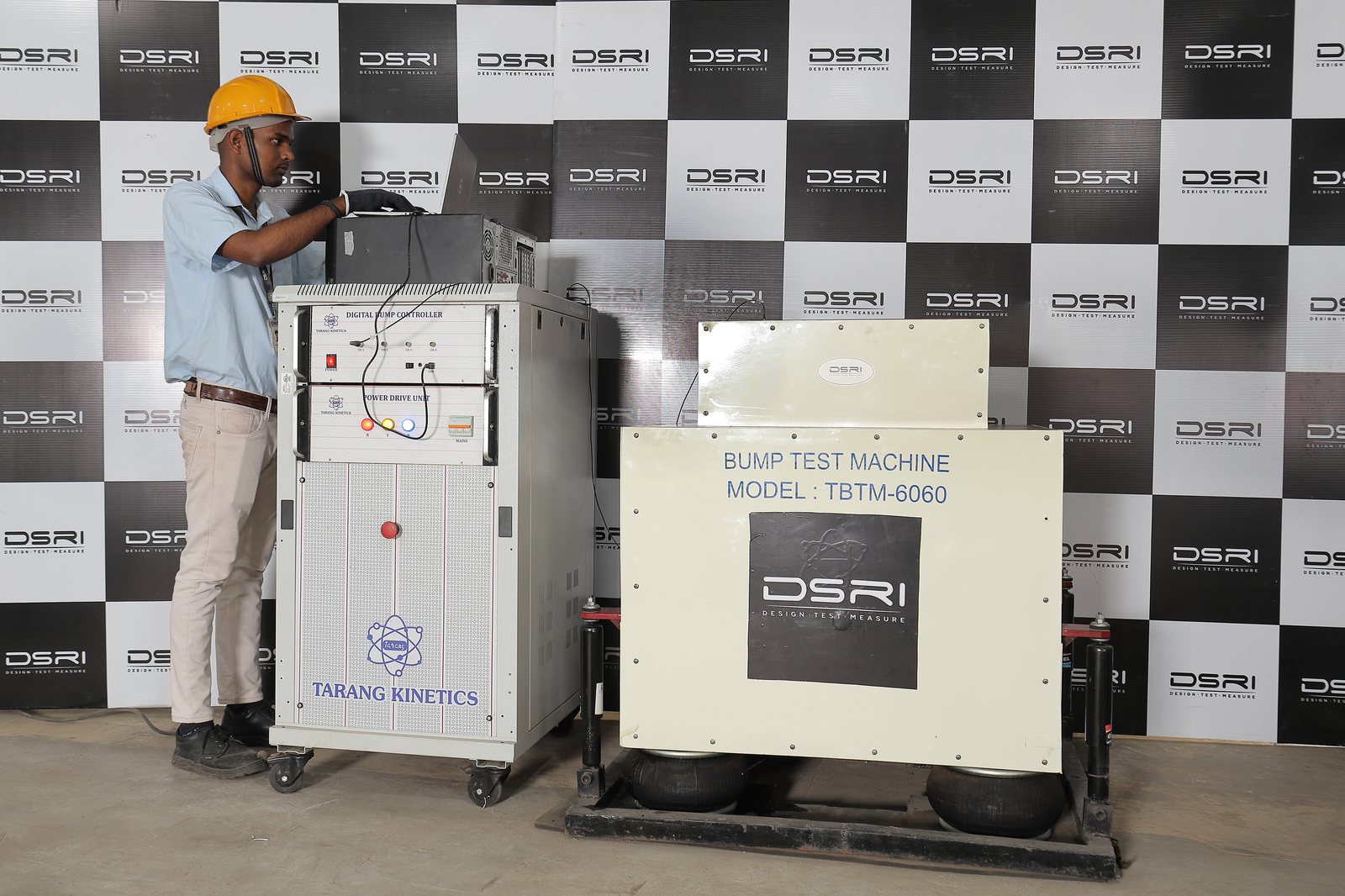
- Big & small bump machines
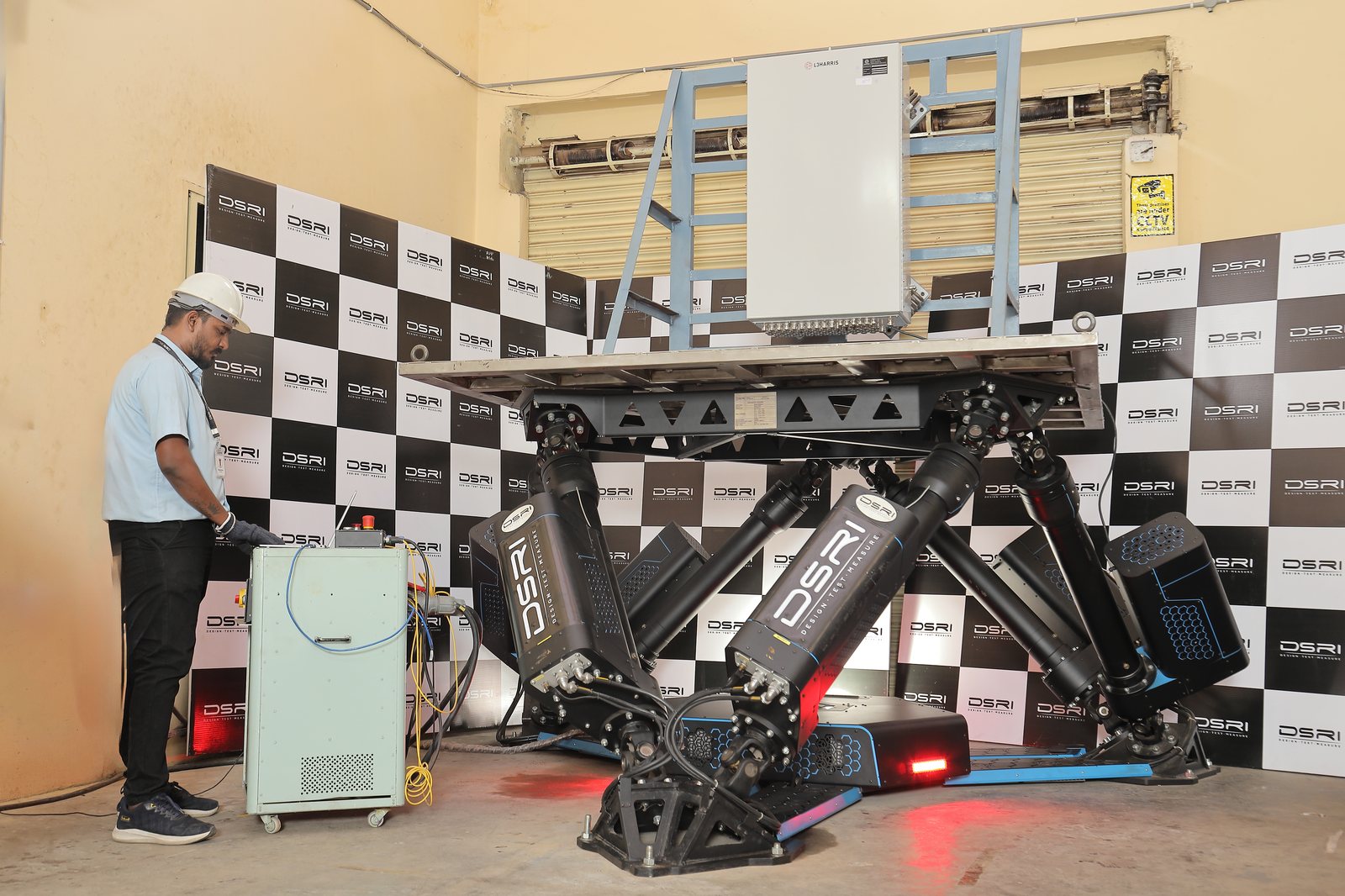
- Ship-motion machine
Engineering alongside
Pre-test analysis, fixture design and correlation are available for every job in this lab — so a marginal design is caught in the model, not on the machine.
Engineering →Which test answers your question?
Not sure which test you need? Start with what your equipment will go through — transport, shipboard service, rail, a hard landing. Every test here is NABL accredited, run on our own machines in Hyderabad. Engineers: methods, standards and reported properties are in the standards & methods reference.
Vibration
Where does my unit shake the most — and does it survive there?
We shake the unit through a range of frequencies to find where it resonates, then hold it there — the points where brackets crack and connectors work loose.
You get- The frequencies where your unit resonates
- Whether they moved after the test — a sign of damage
- What we saw during and after
Will it survive the journey — and years in service?
Real vibration isn't one frequency; it's all of them at once. We reproduce the vibration of a truck, aircraft or ship in the lab, axis by axis, for as long as your standard asks.
You get- Proof the specified vibration was applied
- How long, in which direction
- What we saw during and after
Is it fit to ride on a train for thirty years?
Equipment on rolling stock is shaken for its whole life. We compress those years into hours at higher levels, set by where on the train your equipment sits.
You get- Pass or fail against IEC 61373
- Vibration and shock records
- What we saw during and after
Will it survive the vibration of a warship?
Naval equipment has to live with engines and propellers turning for decades. We run the navy's vibration sequence, from a search for weak spots to hours of endurance at them.
You get- Pass or fail against the navy standard
- Where it resonated and for how long it was held there
- What we saw during and after
Knocks, bumps & drops
Can it take a hard hit?
A single sharp jolt — a heavy landing, a nearby explosion, a dropped crate. We deliver exactly the jolt your standard specifies, in every direction.
You get- A record of each jolt, checked against the standard
- How many, in which directions
- What we saw during and after
What happens after thousands of small knocks?
Not one big hit but thousands of smaller ones — like a truck on a rough road. It shakes loose what a single shock won't.
You get- How many bumps, how hard
- What we saw during and after
What if it's dropped?
Equipment gets dropped — in its box on the way to site, or off a bench in use. We drop it the way your standard says, onto faces, edges and corners.
You get- Which drops, from what height
- What we saw after each
Acceleration, tilt & ship motion
Will it hold together under g-force?
In a turning aircraft or a launch, equipment is pressed hard in one direction for seconds or minutes. We spin it on a centrifuge to create that load.
You get- The g-force applied, for how long, in which directions
- What we saw during and after
Will it work at sea — without a sea trial?
Ships roll, pitch and heave. We reproduce that motion on land, so shipboard consoles and machinery can be proven before they go aboard.
You get- The motions applied, and for how long
- What we saw during and after
Will it keep working when the deck tilts?
A listing ship or an offshore platform tilts everything on board. We tilt your equipment to the angles your specification sets and hold it there.
You get- The angles applied, and for how long
- What we saw during and after
Technical detail for engineers — methods, standards, reported properties →
See how your unit responds, not just what the shaker did
The shaker controller only knows the table. We put accelerometers and strain gauges on your unit — on the boards, brackets and mounts that matter — and record up to 80 channels alongside the test profile. You see where the unit amplifies the vibration, which part carries the load, and what happened in the exact millisecond of a shock.
Plan an instrumented vibration test- Response at every critical location during sine, random and shock — resonances found, not guessed
- Evidence for a design change when something fails on the table
- Up to 80 channels, all on one clock, lined up with the test machine's own signals
- Sampling at up to 1 million samples a second, per channel — fast events aren't missed
- Dewesoft and HBK LAN-XI acquisition modules
Dewesoft, HBK and LAN-XI are trademarks of their respective owners, named only to identify the equipment we use; no endorsement or affiliation is implied.
From specimen to signed report
Profile check
We check your test levels against the machine — force, frequency and stroke, with the mass of your unit and its fixture — before we quote.
Fixture
The fixture holds your unit without adding shake of its own. We design and make one, or check yours on the shaker before use.
Receipt & set-up
Your unit is logged on its QR custody label, mounted, and fitted with the accelerometers that control and monitor the test.
Testing
Axis by axis and profile by profile, with every run recorded. Progress photos appear in your customer portal as the test runs.
Report
Results against the standard, with the control records and observations — under the NABL symbol where the method is accredited. Photographs in the report on request.
What to send for a quotation
- The unit: size, mass and how it mounts — a drawing of the mounting points helps
- The standard and clause — test levels, durations and axes, or the specification that sets them
- Whether the unit will be switched on during the test, the power it needs, and what should be monitored — we can provide both
- Whether you have a fixture, or need us to make one
- How many units
Who we test for
Dynamic test lab work feeds qualification programmes across these sectors — each page shows the standards and problems we see most.
For engineers: the full method table, standards and equipment ranges for this lab are under For engineers → Methods & standards and Equipment & ranges.
Questions we get about dynamic test lab work
Can we witness the test?
Yes. Tell us at enquiry and we'll book a witness slot. Third-party inspectors are welcome too — RITES, Lloyd's Register, CQAE, IRS, ABS, RINA and other agencies witness tests here.
Do you make the fixture?
Yes. We design fixtures by analysis so they don't add resonances of their own, make them, and check them on the shaker before your unit goes on. If you bring your own, we check it first and put the result in the report.
How big a unit can you test?
From bench-top units to full 42U racks and naval consoles. Our largest shaker is 16,000 kgf; send the size and mass and we'll confirm the machine before we quote.
Can our unit be switched on and monitored during the test?
Yes. We provide power and monitoring during the test — tell us what the unit needs and what should be watched, and we'll set it up.
How long does it take?
We reply to enquiries within one working day. Fixture design, if you need one, comes first; the test takes as long as the standard sets, and the report follows within 2–3 working days of the test. When we can start depends on machine availability, which we confirm with the quotation.
Why are some tests accredited and some not?
Our accredited methods are the ones customers ask for most, so we keep them under regular NABL assessment and report them under the NABL symbol. Non-accredited work is usually a custom, rare or specialised method — or one we develop for your problem — reported without the NABL symbol.
Ready to quote dynamic test lab work?
Send the standard, the profile and the unit size — we'll confirm the machine and the schedule.