
Prove it works from the Himalayas to the Arabian Sea — heat, cold, humidity, salt, dust and water.
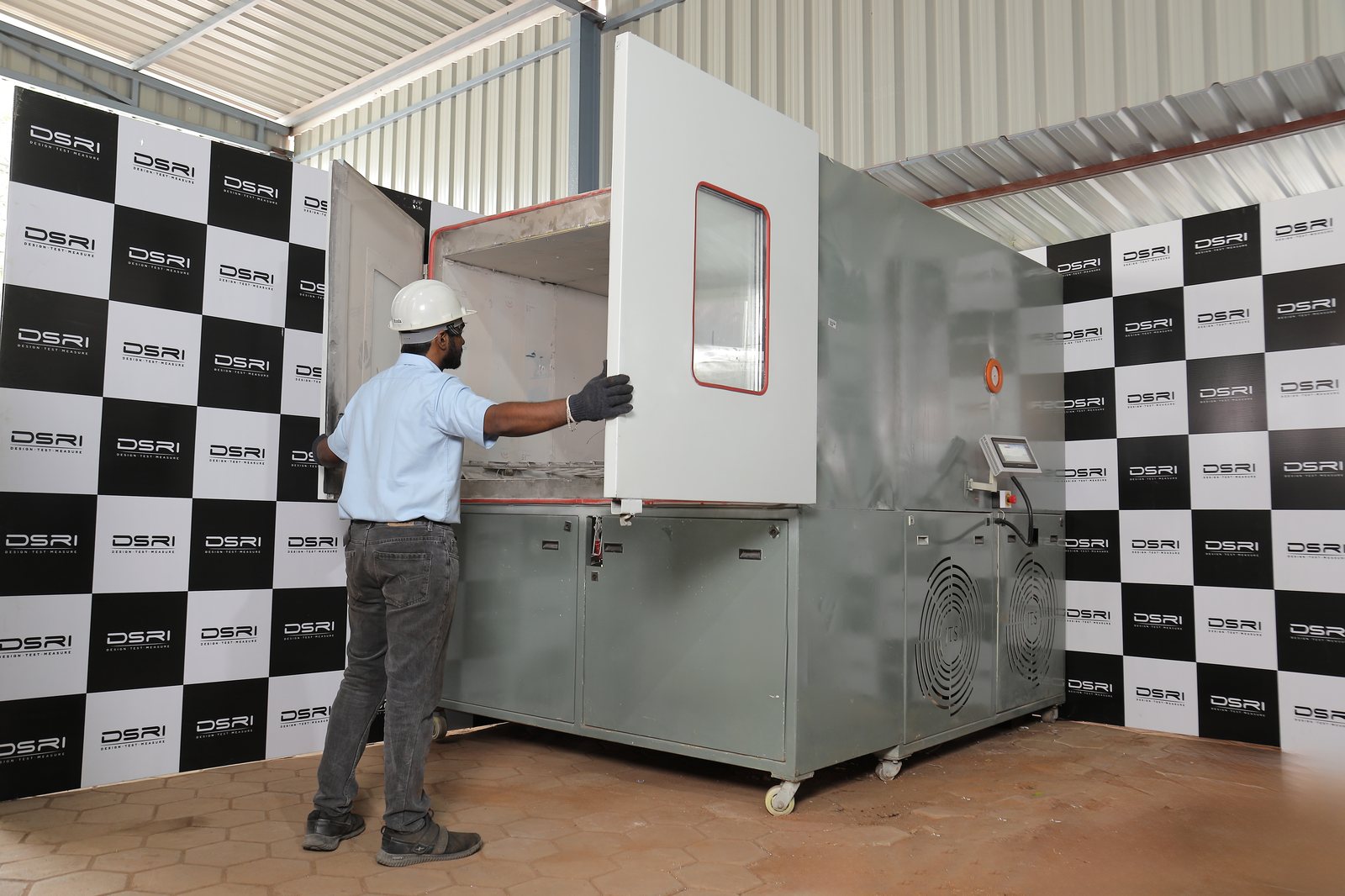
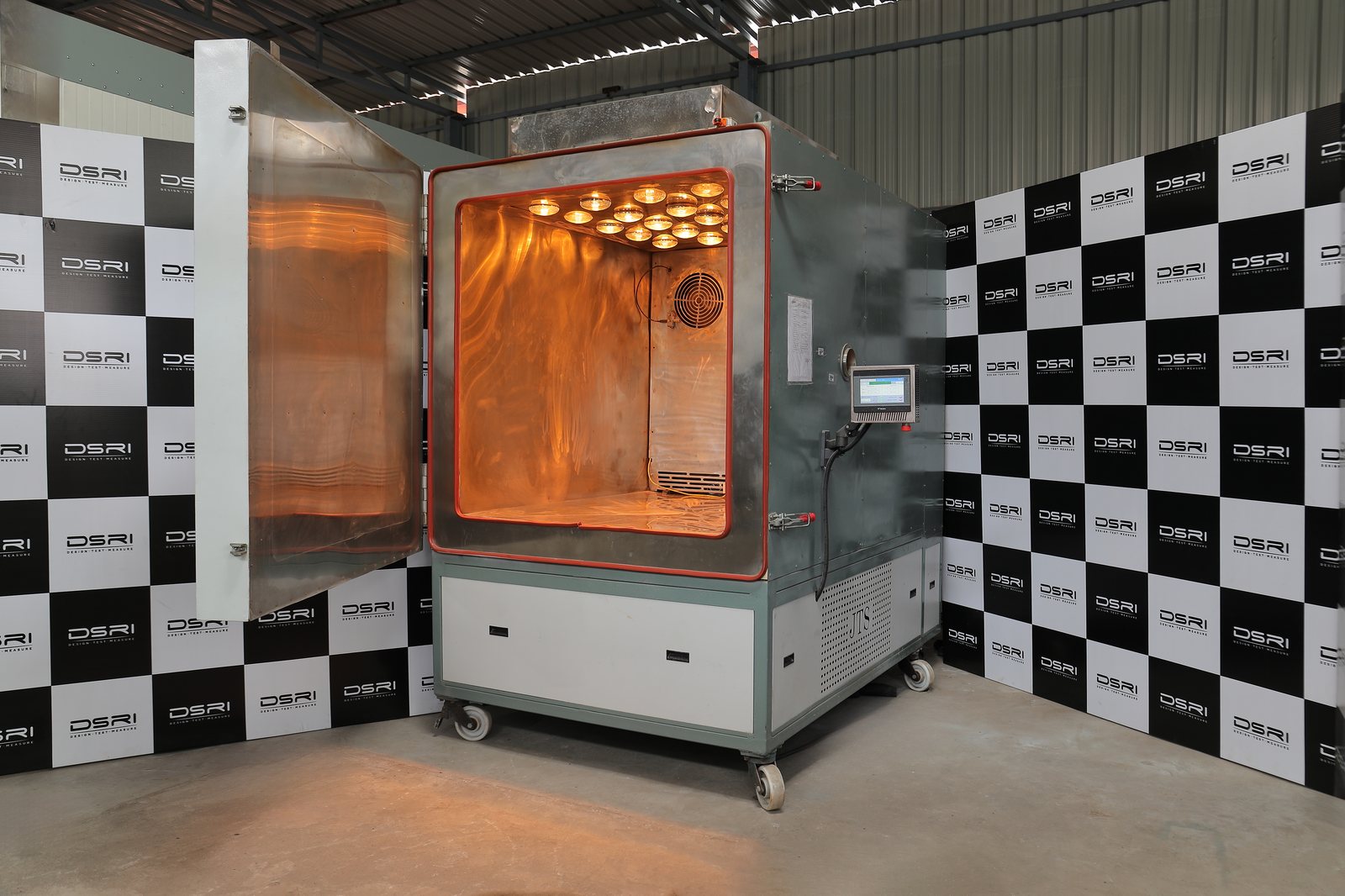
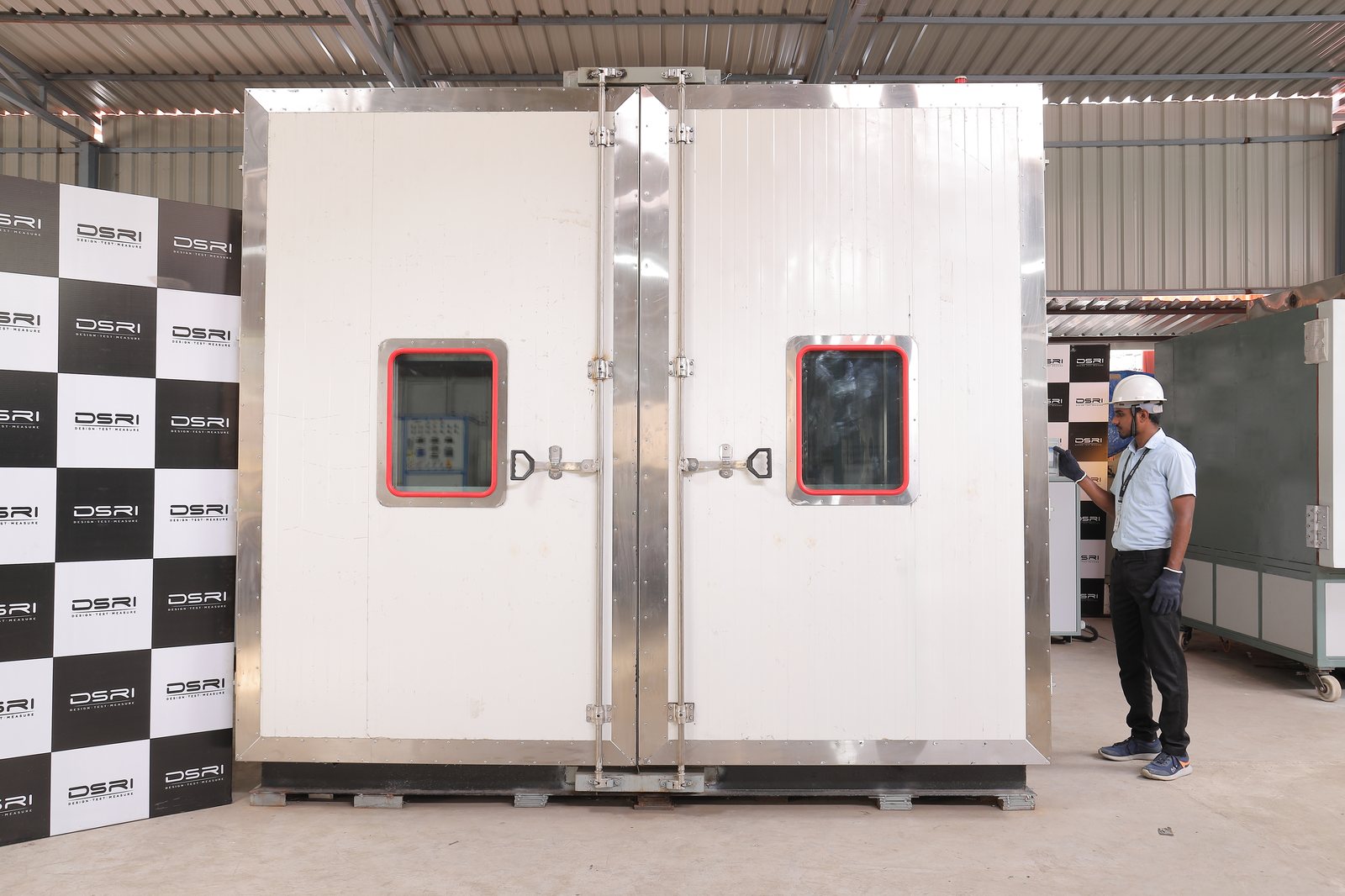
Chambers from −70 °C to +180 °C — walk-in rooms big enough for racks and vehicle-scale assemblies — plus humidity, salt, sun, altitude, dust and water, to prove your equipment works wherever it's sent.
What customers bring us
Damp-heat and thermal-cycling qualification of outdoor telecom enclosures to IEC 60068-2-30 / -14
Salt-fog and driving-rain endurance of deck-mounted equipment to JSS 55555
IP 6X / IP X8 ingress proof for field radios and sensors
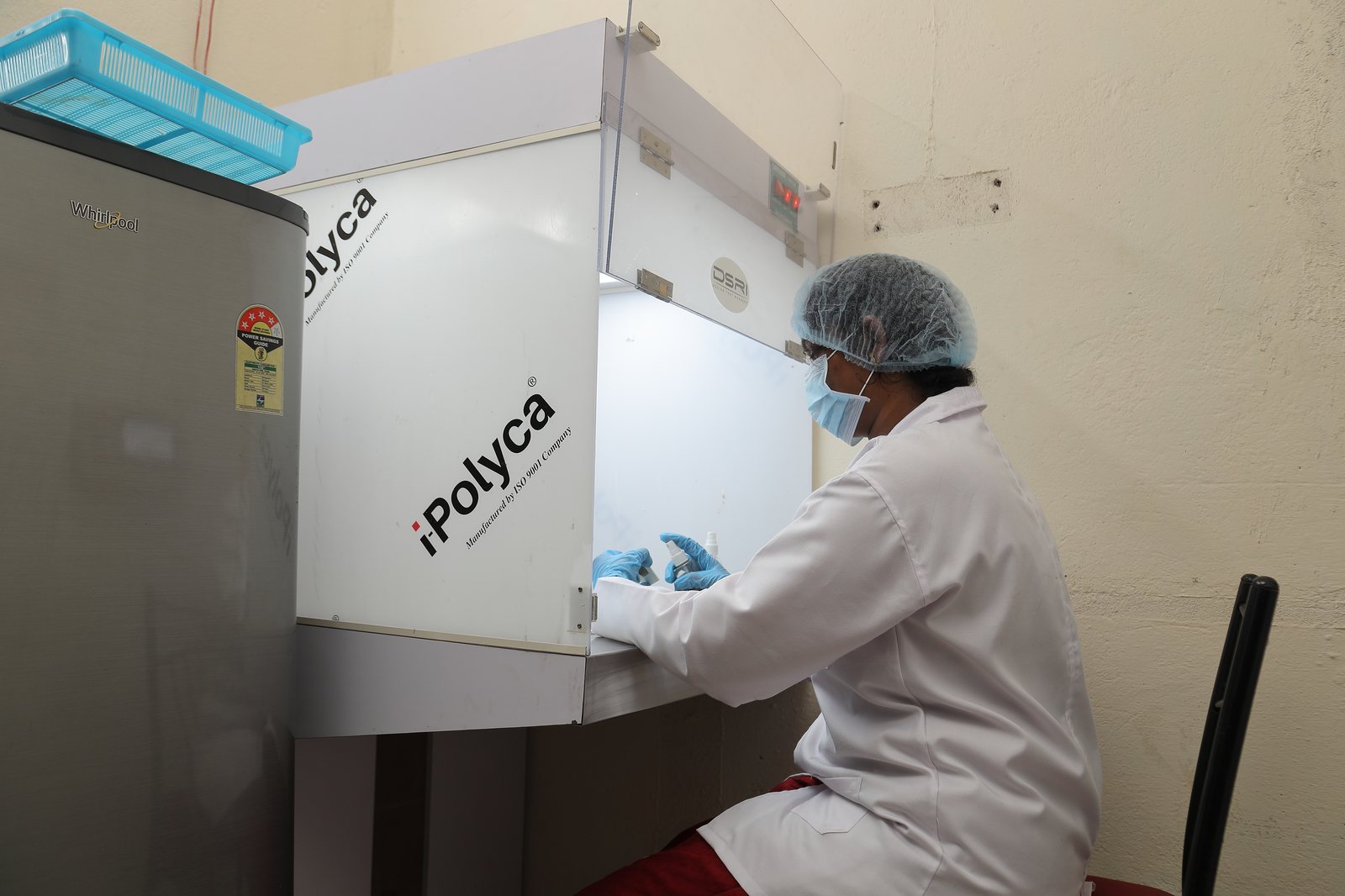
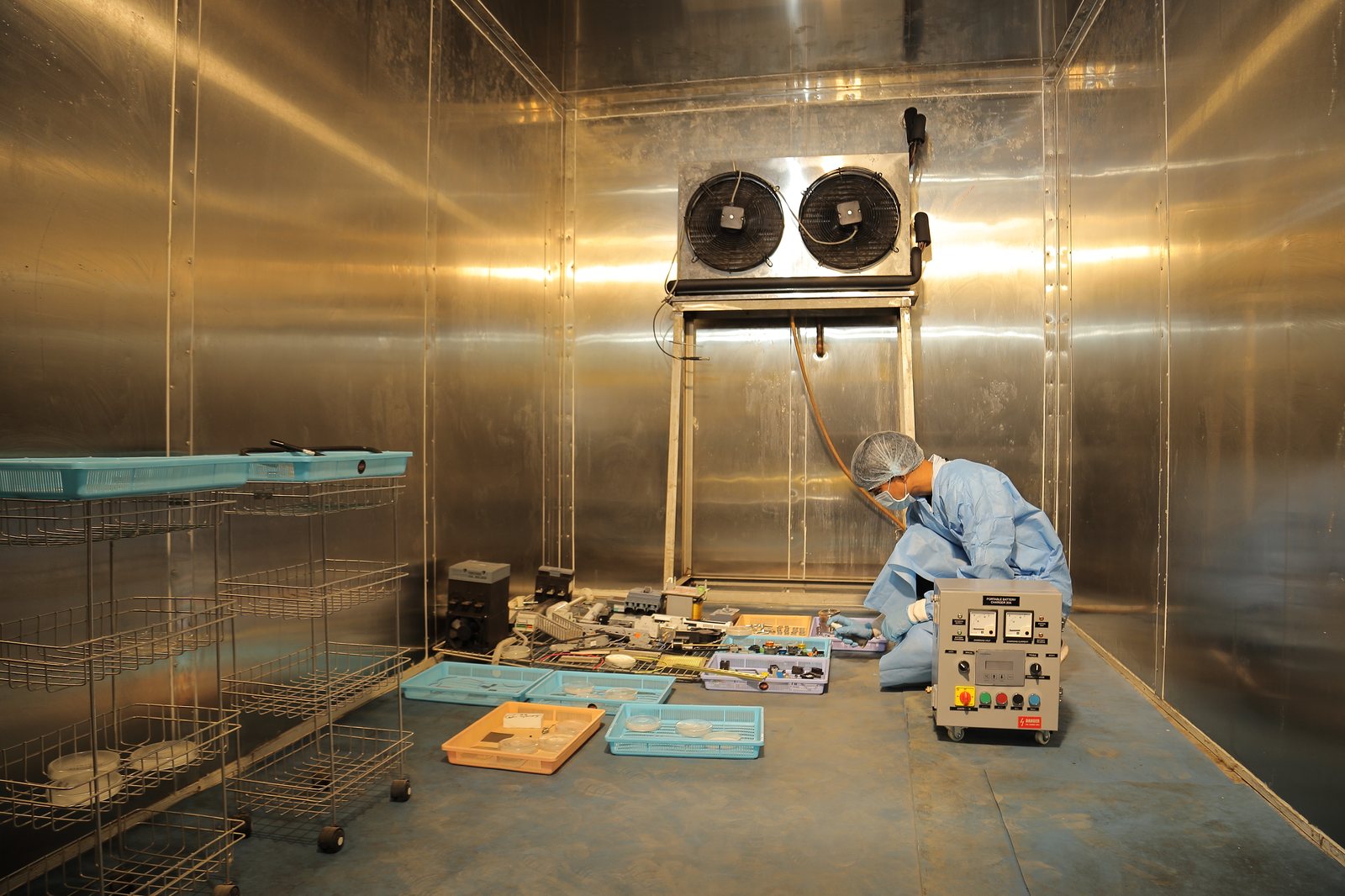
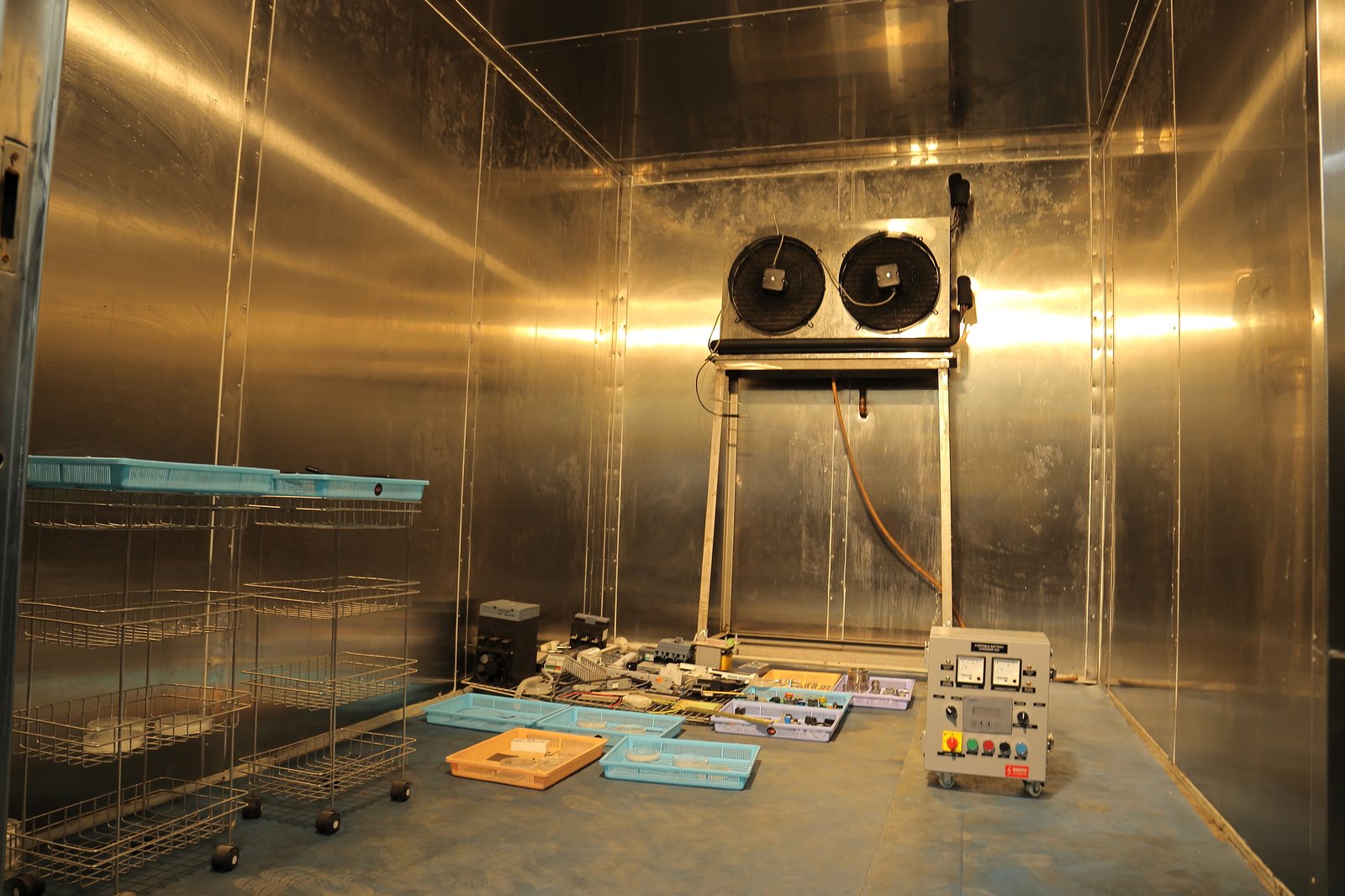
What we run it on
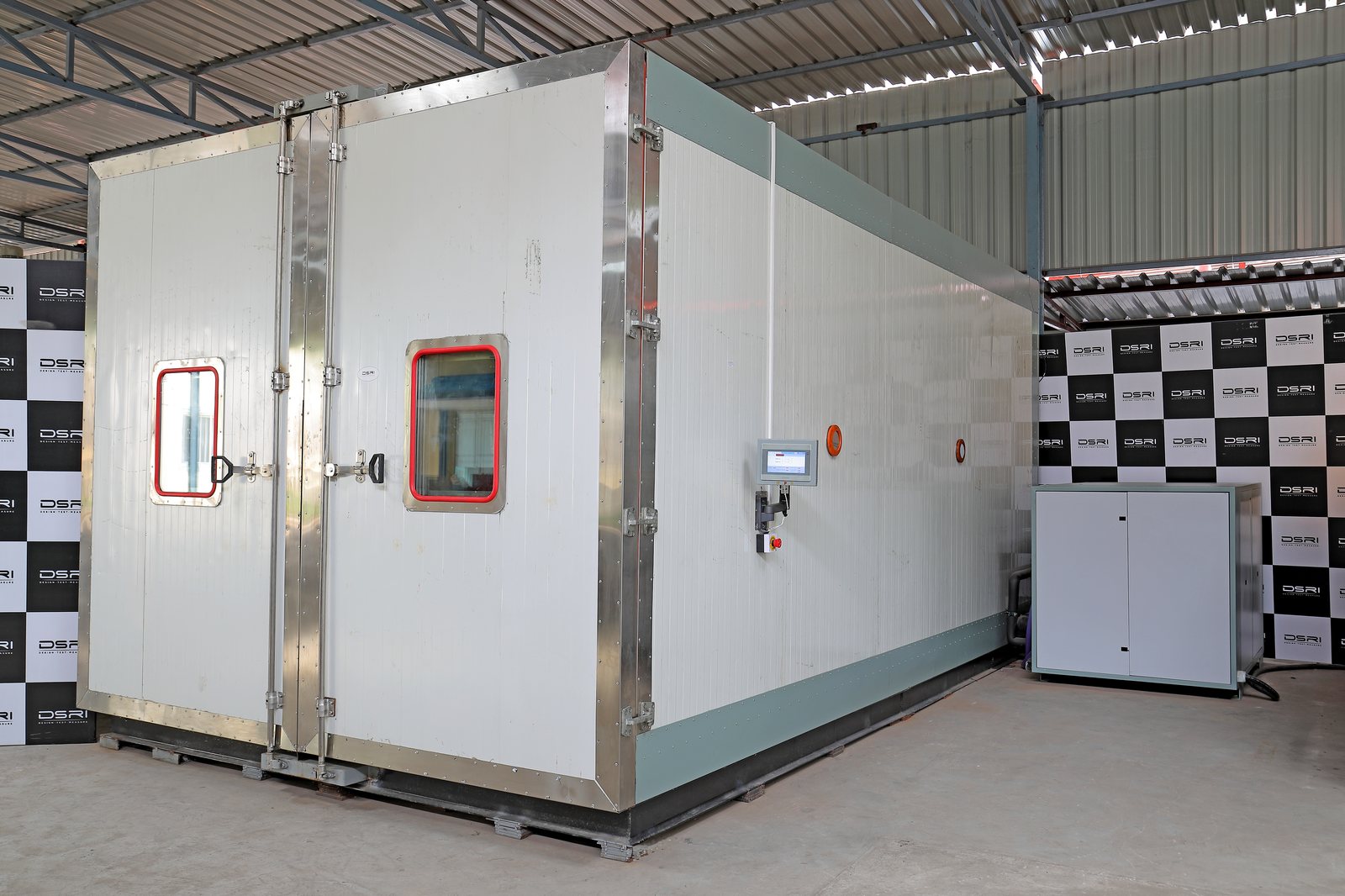
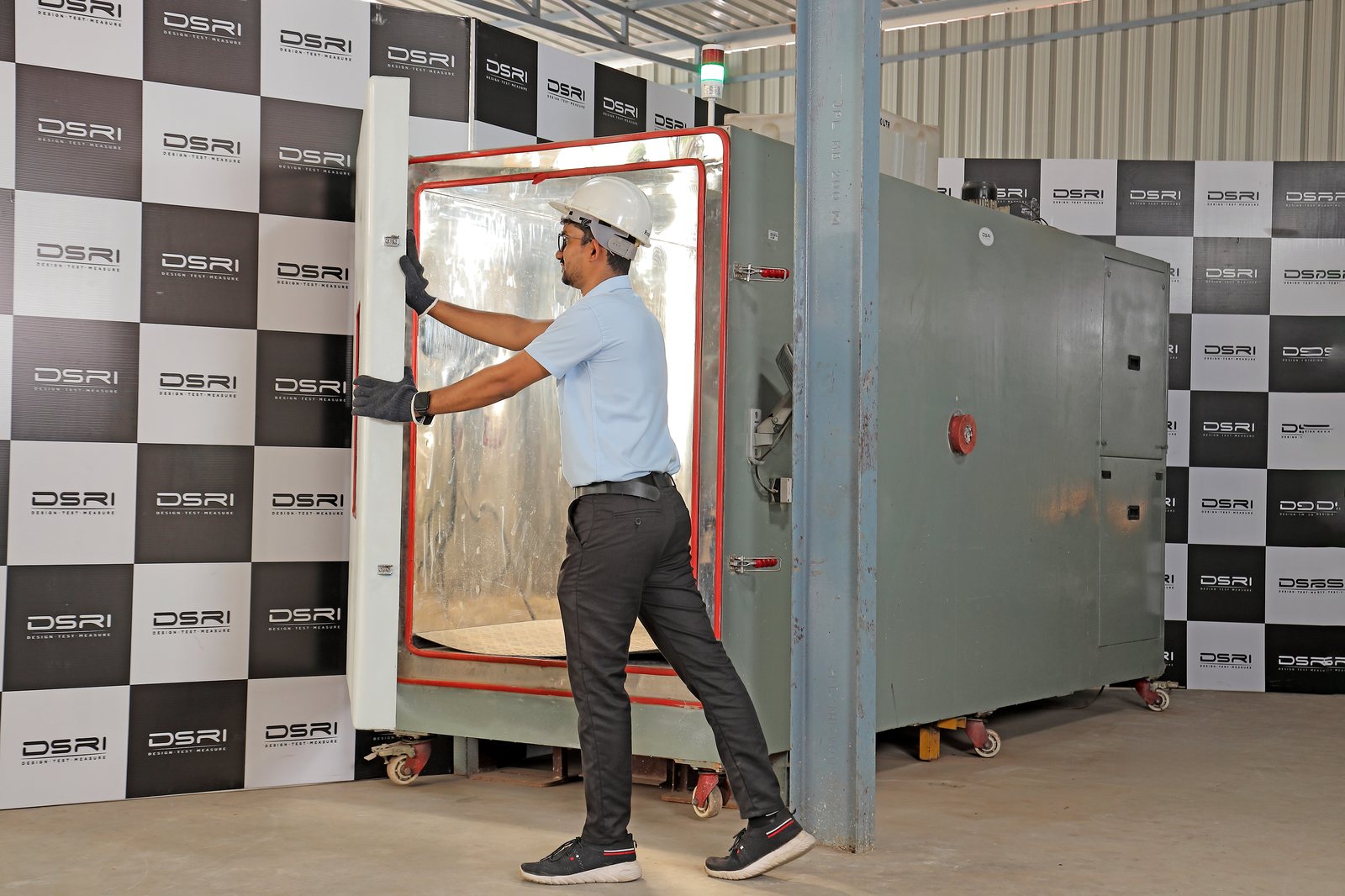
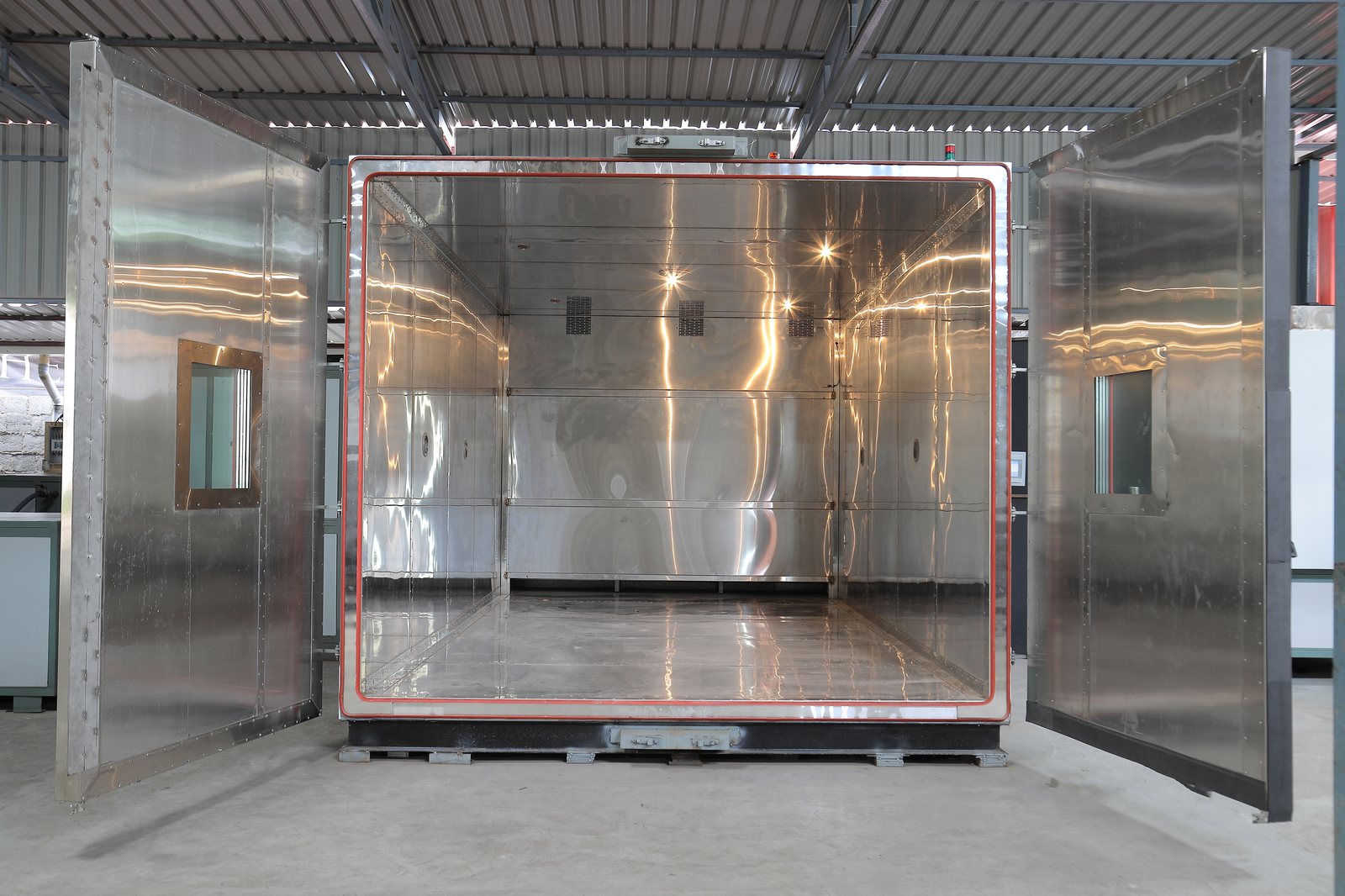
- 2 m and 5 m walk-in chambers
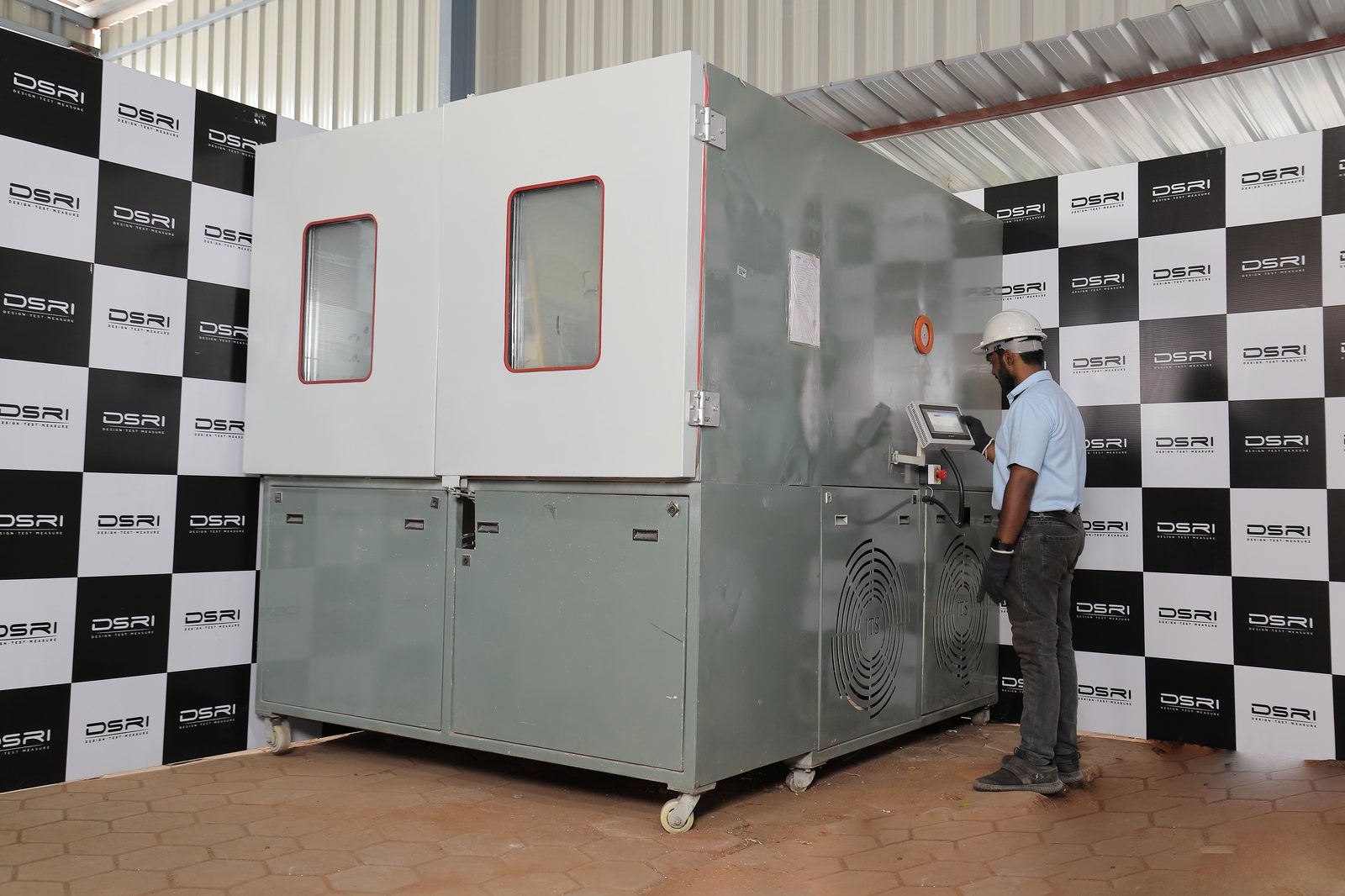
- Combined altitude-temperature-humidity (CATH) chamber
- Envitronics & Zeta-Tek climatic chambers
- Salt-corrosion chamber
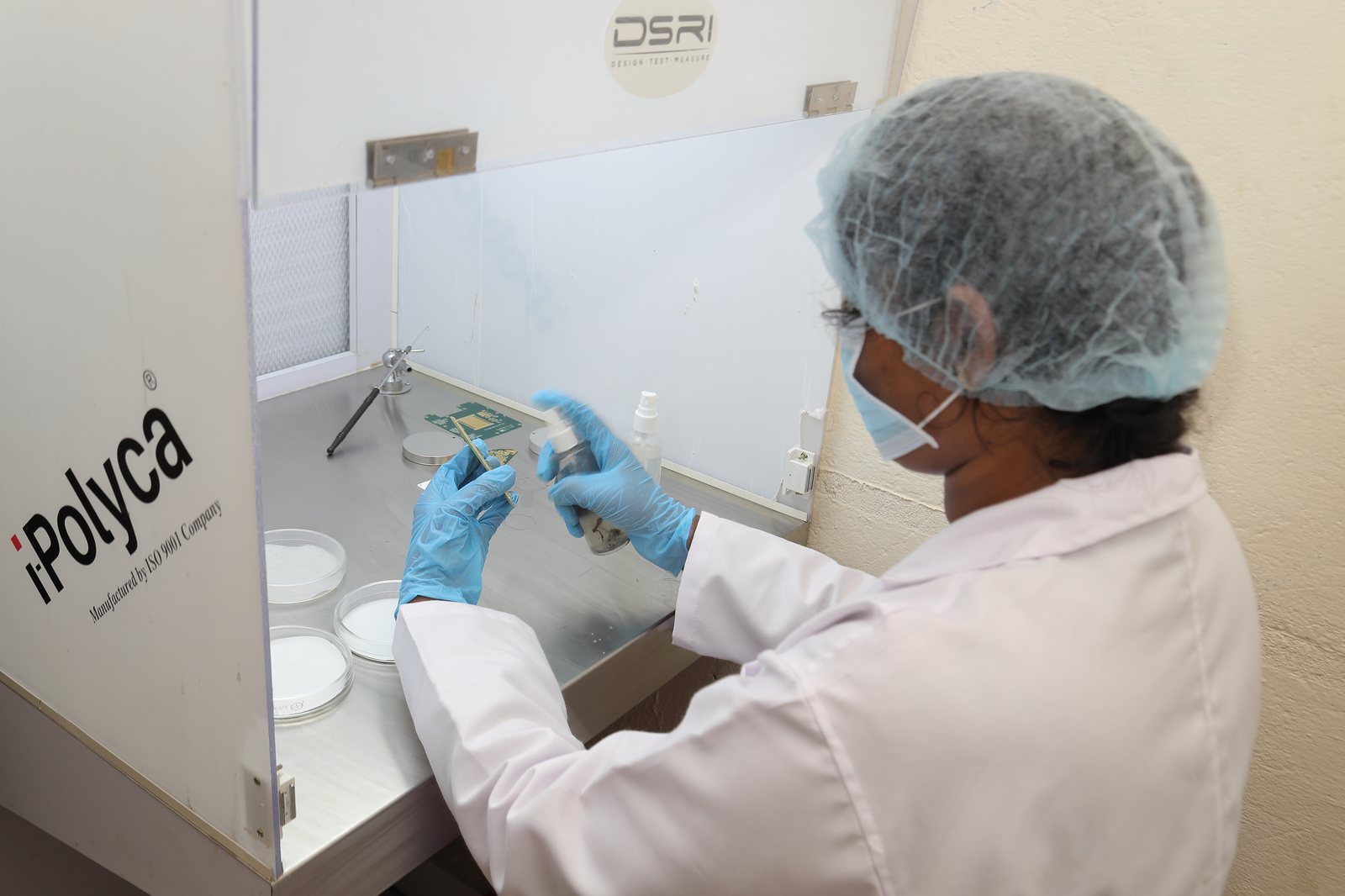
- Mould-growth chamber
- Hot oven
Engineering alongside
Pre-test analysis, fixture design and correlation are available for every job in this lab — so a marginal design is caught in the model, not on the machine.
Engineering →Which test answers your question?
Not sure which test you need? Start with where your equipment will live — a desert, a ship's deck, a cold mountain pass, a hangar at altitude. Every test here is NABL accredited, run in our own chambers in Hyderabad. Engineers: methods, standards and reported properties are in the standards & methods reference.
Heat & cold
Will it keep working in the heat?
A sealed box in the sun gets far hotter than the air around it. We hold your equipment at the temperature your standard sets — stored, and switched on.
You get- A record of the temperature it saw, and for how long
- What we saw before and after
Will it start in the cold?
Batteries fade, grease stiffens, plastics crack. We chill your equipment as low as −70 °C and check it still starts and works.
You get- A record of the temperature it saw, and for how long
- What we saw before and after
What happens when it goes from hot to cold, again and again?
Every change of temperature makes materials expand and shrink at different rates — which cracks solder joints and breaks seals. We cycle it, fast.
You get- How many cycles, between which temperatures
- What we saw during and after
Can we catch faulty units before they ship?
Screening shakes out weak solder joints and bad parts in production units, so failures happen here and not in the field.
You get- Which units passed screening
- What failed, and when
Damp, tropics & mould
Will moisture get in?
Warm, wet air finds its way into enclosures and condenses as it cools, corroding contacts and shorting boards. We hold your equipment in it for days or weeks.
You get- A record of the heat and humidity it saw
- What we saw during and after
Will it last in a hot, humid climate?
The tropics wear equipment down slowly. Our walk-in room is big enough for full cabinets and assemblies to live there for as long as your standard sets.
You get- A record of the climate it lived in
- What we saw at the end
Will mould grow on it?
In warm, damp places mould grows on some plastics, coatings and cables — and can attack them. We check whether your materials feed it.
You get- How much mould grew, and where
- Pass or fail against your standard
Salt, sun & altitude
Will it rust at sea?
Salt air eats metal and finishes. We expose your equipment to a fine salt fog for as long as the standard sets, then look for corrosion.
You get- How long it was exposed
- Where it corroded, if it did
What does the sun do to it?
Sunlight heats equipment far beyond the air temperature and fades and cracks plastics. We reproduce the sun in the lab.
You get- A record of the sunlight and heat it saw
- What we saw during and after
Will it work in an aircraft or high in the mountains?
Thin air cools poorly, lets sparks jump, and makes sealed parts swell. We lower the pressure — with heat or cold if you need — to match the altitude.
You get- The altitude simulated, and for how long
- What we saw during and after
Dust, water & fluids
Does dust get in?
Dust clogs fans, wears moving parts and tracks across circuits. We blow it at your enclosure, then open it up and look.
You get- Whether it meets the IP rating
- What we found inside
Is it really waterproof?
From a few drips to hosing it down to sinking it — we test to the IP rating on your label, then check inside for water.
You get- Whether it meets the IP rating
- What we found inside
What if fuel or oil gets on it?
Equipment near engines gets splashed with fuel, oil and cleaners. We expose it to the fluids it will meet and check nothing softens, cracks or stops working.
You get- Which fluids, and for how long
- What we saw after
Technical detail for engineers — methods, standards, reported properties →
From specimen to signed report
Test plan
We confirm the conditions, durations and the order of tests — many qualifications run in sequence on the same unit — and check your unit fits the chamber.
Receipt & set-up
Your unit is logged on its QR custody label, inspected, and placed in the chamber with sensors where the standard needs them.
Exposure
The chamber runs the profile while temperature, humidity or pressure are recorded continuously. Progress photos appear in your customer portal.
Recovery & inspection
After exposure the unit recovers as the standard sets, then we inspect it — and your team can check it works.
Report
Results against the standard, with the chamber records and observations — under the NABL symbol where the method is accredited. Photographs in the report on request.
What to send for a quotation
- The unit: size, mass, and whether it runs on its own or needs cables and support equipment in the chamber
- The standard and clause — temperatures, humidity, durations, cycles, and the order of tests
- Whether the unit will be switched on during the test, and how much power it draws — heat from a powered unit changes what the chamber has to do
- Any parts that need protecting or special handling
- How many units
Who we test for
Climatic test lab work feeds qualification programmes across these sectors — each page shows the standards and problems we see most.
For engineers: the full method table, standards and equipment ranges for this lab are under For engineers → Methods & standards and Equipment & ranges.
Questions we get about climatic test lab work
Can we witness the test?
Yes. Tell us at enquiry and we'll book a witness slot. Third-party inspectors are welcome too — RITES, Lloyd's Register, CQAE, IRS, ABS, RINA and other agencies witness tests here.
How big a unit fits?
Our walk-in rooms take racks, cabinets and vehicle-scale assemblies — the tropical-exposure room is 3 × 3 × 5 m and the altitude chamber 2.5 × 2.5 × 4 m (height × width × length). Send the size and mass and we'll confirm the chamber.
Can you run several tests in sequence?
Yes — most qualifications do. We plan the order your standard sets and book the chambers back to back, so your unit moves straight from one test to the next.
Can our unit be switched on and monitored in the chamber?
Yes. We provide power and monitoring during the test. Tell us how much power the unit draws — heat from a powered unit affects the chamber, so we size the test for it.
How long does it take?
We reply to enquiries within one working day. The standard sets the test length — a 21-day damp-heat test takes 21 days — and the report follows within 2–3 working days of the test. When we can start depends on chamber availability, which we confirm with the quotation.
Why are some tests accredited and some not?
Our accredited methods are the ones customers ask for most, so we keep them under regular NABL assessment and report them under the NABL symbol. Non-accredited work is usually a custom, rare or specialised method — or one we develop for your problem — reported without the NABL symbol.
Ready to quote climatic test lab work?
Send the standard, the profile and the unit size — we'll confirm the machine and the schedule.